The Creator: Dr. Carter G. Woodson
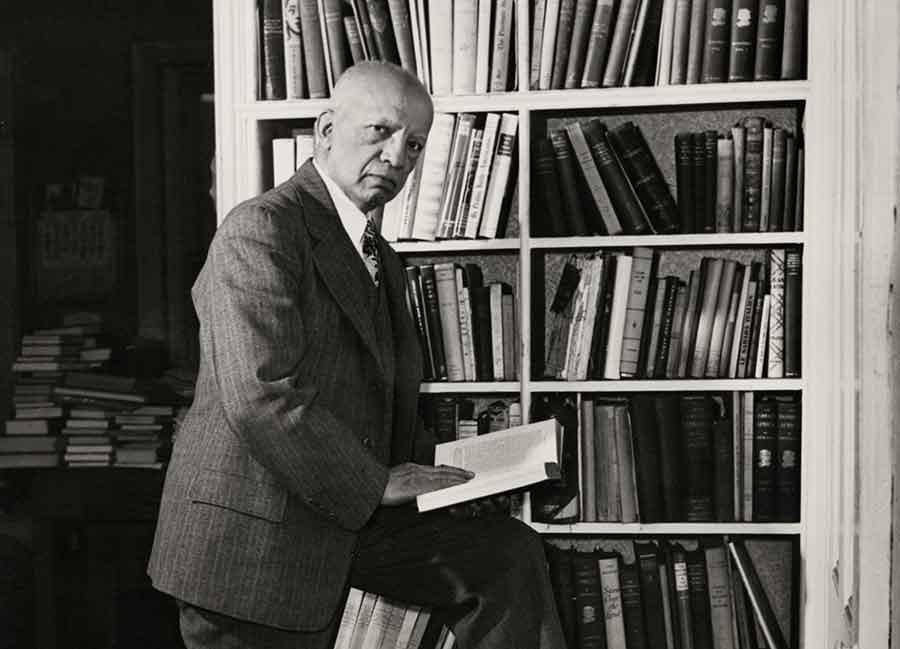
Black History Month traces directly to the work of Dr. Carter Godwin Woodson, an American historian, author, and journalist often called the Father of Black History. Woodson founded the Association for the Study of Negro Life and History (ASNLH) — today known as ASALH — and dedicated his life to correcting the erasure of Black contributions from mainstream historical narratives.
Where and When It Began
The story begins in Chicago in the summer of 1915, when Woodson travelled from Washington, D.C. to participate in a national celebration marking the 50th anniversary of emancipation. The event showcased the progress of African Americans since the end of slavery and inspired Woodson to institutionalize the study of Black history.
In February 1926, Woodson formally launched Negro History Week, choosing the month to align with the birthdays of Frederick Douglass and Abraham Lincoln, two figures central to the struggle for Black freedom.
Why It Was Created
Woodson believed that the omission of Black achievements from education was not accidental — it was a structural tool of racism. He argued that historical ignorance enabled discrimination, and that empowering Black people with knowledge of their heritage was essential to liberation. Negro History Week was designed to:
- Promote scholarly research on Black history
- Highlight Black achievements across all fields
- Counter racist narratives in education and public life
- Encourage schools and communities to celebrate Black contributions
As Woodson famously stated, the movement was “much more important than the anti-lynching movement, because there would be no lynching if it did not start in the schoolroom.”
From a Week to a Month
Over the decades, Negro History Week grew in influence. In 1976, during the U.S. bicentennial, it was officially expanded to Black History Month, and later adopted internationally — including by the United Kingdom in 1987.
The 100th Year: Why 2026 Matters
February 2026 marks 100 years since the first Negro History Week — the seed that grew into Black History Month. This centennial is significant because:
- It honours a century of organised efforts to preserve and teach Black history.
- It highlights the endurance of Woodson’s vision despite decades of resistance.
- It reminds us that the fight against historical erasure is ongoing.
- It celebrates the global expansion of a movement that began with one historian’s determination.
The centennial is widely recognised as a monumental milestone in cultural memory and historical justice.
The Role of Black Scientists and Inventors
Why Their Contributions Matter to BHM
Black scientists, engineers, and inventors embody the very purpose of Black History Month: to illuminate achievements that were ignored, minimized, or stolen due to systemic racism.
Their work demonstrates that Black excellence has always been foundational to global progress — even when society refused to acknowledge it.
Historical Significance
Research shows that during the “Golden Age of Invention” (1870–1940), Black inventors in the Northern U.S. received patents at rates proportional to their population, despite facing immense barriers. Their innovations shaped agriculture, medicine, transportation, communication, and everyday life.
Figures such as:
- George Washington Carver, whose agricultural chemistry transformed farming and introduced hundreds of new products.
- Dozens of lesser-known inventors whose patents and breakthroughs underpin modern technology, engineering, and industry.
Their stories exemplify resilience, creativity, and scientific brilliance — precisely the narratives Woodson sought to preserve.
Modern Relevance
Contemporary lists of Black scientists and engineers continue to grow, reflecting ongoing contributions to STEM fields. These include innovators in:
- Cancer research
- Aerospace engineering
- Computer science
- Environmental science
- Robotics and AI
Educational initiatives during BHM often highlight these figures to inspire new generations.
Why Their Inclusion Is Essential
Black scientists and inventors play a central role in BHM because:
- They challenge stereotypes about who belongs in STEM.
- They demonstrate that Black brilliance has always been integral to scientific advancement.
- They provide role models for young learners.
- They reinforce Woodson’s mission: to ensure that Black contributions are permanently written into the historical record.
Conclusion
Black History Month began as a radical act of historical reclamation by Dr. Carter G. Woodson in 1926. One hundred years later, its mission remains vital. The centennial is not just a celebration — it is a reminder of the ongoing responsibility to honour, teach, and expand the narrative of Black achievement.
The contributions of Black scientists and inventors are not a footnote to this story; they are at its core. Their innovations, often overlooked, exemplify the intellectual, creative, and cultural power that Black History Month was created to uplift.


