From Centralia to Berkeley — Against the Odds
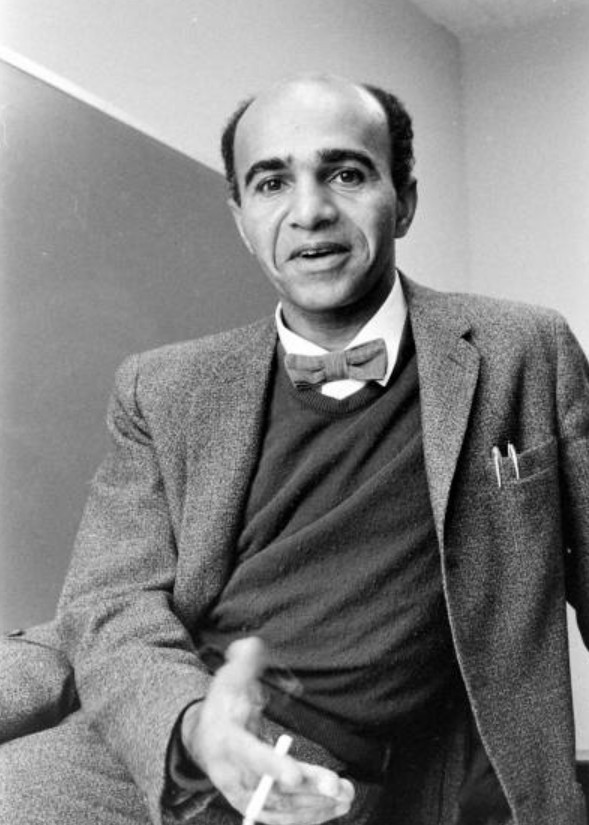
David Blackwell grew up the son of a railway worker in southern Illinois. He taught himself to read, as a child, from seed packets in his grandfather's general store. By 16, he had enrolled at the University of Illinois, and by 22 he had a doctorate in mathematics — having entered college planning to become an elementary school teacher.
After earning his PhD, he applied for a prestigious fellowship at the Institute for Advanced Study in Princeton — the same institution where Albert Einstein worked. He was awarded the fellowship, but was barred from attending lectures at nearby Princeton University because of his race. He sought a permanent position elsewhere and wrote letters of application to 104 historically Black colleges and universities in 1942, receiving a total of only three offers.
He eventually joined the mathematics faculty at Howard University, one of America's most celebrated historically Black universities, where his really serious mathematical work began. He thrived there, but the larger academic world continued to hold the door shut. When his mentor at Illinois recommended him for a position at UC Berkeley in 1942, the head of the mathematics department initially agreed — only to reverse course, citing his wife's objection to hiring someone she "couldn't invite to her home."
Twelve years later, Berkeley tried again. This time, they succeeded. In 1954, Blackwell was invited to join the faculty at the University of California, Berkeley, where he became that institution's first African American tenured professor. He went on to chair the newly formed Department of Statistics, and was the first African American inducted into the National Academy of Sciences.
He was, by any measure, extraordinary. Yet outside specialist circles, he remains largely unknown. His granddaughter, Leeza Blackwell, discovered the scale of her grandfather's legacy only when NVIDIA named their most advanced chip after him.
"I thought I knew my grandfather. Eggs at dawn, martinis at dusk. Years later, NVIDIA named their platform Blackwell — that's when I started digging, and discovered my grandfather, Professor Blackwell, architect of the mathematics behind artificial intelligence."
— Leeza Blackwell, granddaughter of David Harold Blackwell
- 22 - Age he earned his PhD in Mathematics
- 104 - Letters sent to HBCUs seeking a faculty post
- 90+ - Papers & books published across his career
So What Did He Actually Do?
This is where we need to pause and talk about the mathematics — but don't worry. You don't need a degree to understand why Blackwell's ideas matter.
Imagine you're playing a card game. You don't know what cards your opponent holds, but with each round, you gather more information and update your strategy. That intuition — making smart decisions under uncertainty, based on accumulating evidence — is at the heart of what Blackwell spent his career building into formal, rigorous mathematics.
He made significant contributions to game theory, probability theory, information theory, and Bayesian statistics. These might sound abstract, but they underpin almost everything intelligent software does today.
His Rao-Blackwell Theorem gave statisticians a systematic way to take a rough estimate and make it as accurate as possible while minimising bias in the data — directly relevant to the challenge of removing bias in AI training data. He is also known for his independent invention of dynamic programming, which is used today in finance and in various areas of science, including genome analysis. Dynamic programming is now one of the core techniques behind reinforcement learning — the method used to train AI systems like the one that mastered chess and Go, and underlies how large language models are fine-tuned.
Working with Leo Breiman and Aram Thomasian, he proved the Shannon transmission theorem for a class of channels, now called the Blackwell channel — and he began to work in dynamic programming, which is now called reinforcement learning, giving a rigorous foundation to the theory and introducing what have become known as Blackwell optimal policies.
His Approachability Theorem — a concept from game theory describing how a player can guarantee reaching a target outcome over time — now informs research into algorithmic fairness, one of the most pressing challenges in AI development today.
He went from one area to another and would write a fundamental paper in each. He would come into a field that had been well-studied and find something really new that was remarkable — that was his forte. As his Berkeley colleague Thomas Ferguson put it, that was Blackwell's genius: the ability to walk into an established field and see what everyone else had missed.
Blackwell's Foundational Methods — Now Critical to AI
- Bayesian Decision Frameworks Underpin probabilistic modelling, machine learning, and AI decision-making under uncertainty.
- Game Theory & Multi-Agent Systems Inform AI strategy, optimisation, negotiation, and learning in interactive environments.
- Dynamic Programming Foundational to pathfinding, control systems, and the architecture of deep learning models.
- Sequential Decision-Making Drives adaptive AI, reinforcement learning, and online algorithm development.
- Information Theory Laid the groundwork for understanding information flow in learning systems and model interpretability.
- Approachability & Fairness His Approachability Theorem now informs models aimed at equitable and fair AI outcomes.
Before We Go Further — What Is a GPU, and Why Does It Matter?
To understand why NVIDIA named their most powerful chip after Blackwell, we first need to understand what that chip actually does.
Your laptop or phone contains a CPU — a Central Processing Unit. Think of it as a highly trained specialist: brilliant at complex, sequential tasks, handling one thing at a time at extraordinary speed. It's the brain of your device, managing your apps, your emails, your spreadsheets.
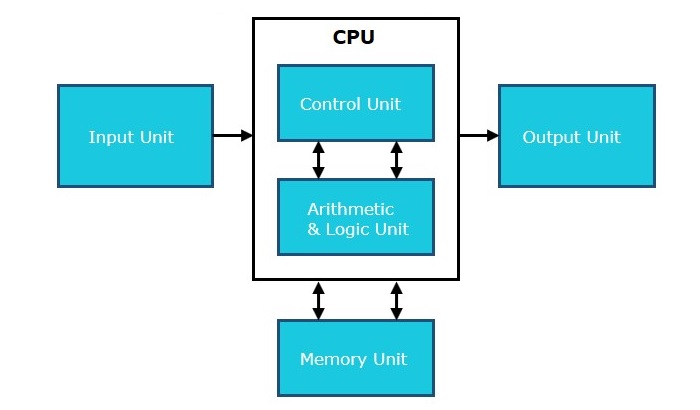
A GPU — a Graphics Processing Unit — works very differently. Originally designed to render the fast-moving images in video games, a GPU contains not a handful of powerful cores like a CPU, but thousands of cores that can complete many computations simultaneously. Where a CPU is a brilliant solo performer, a GPU is an orchestra — thousands of instruments playing in parallel.
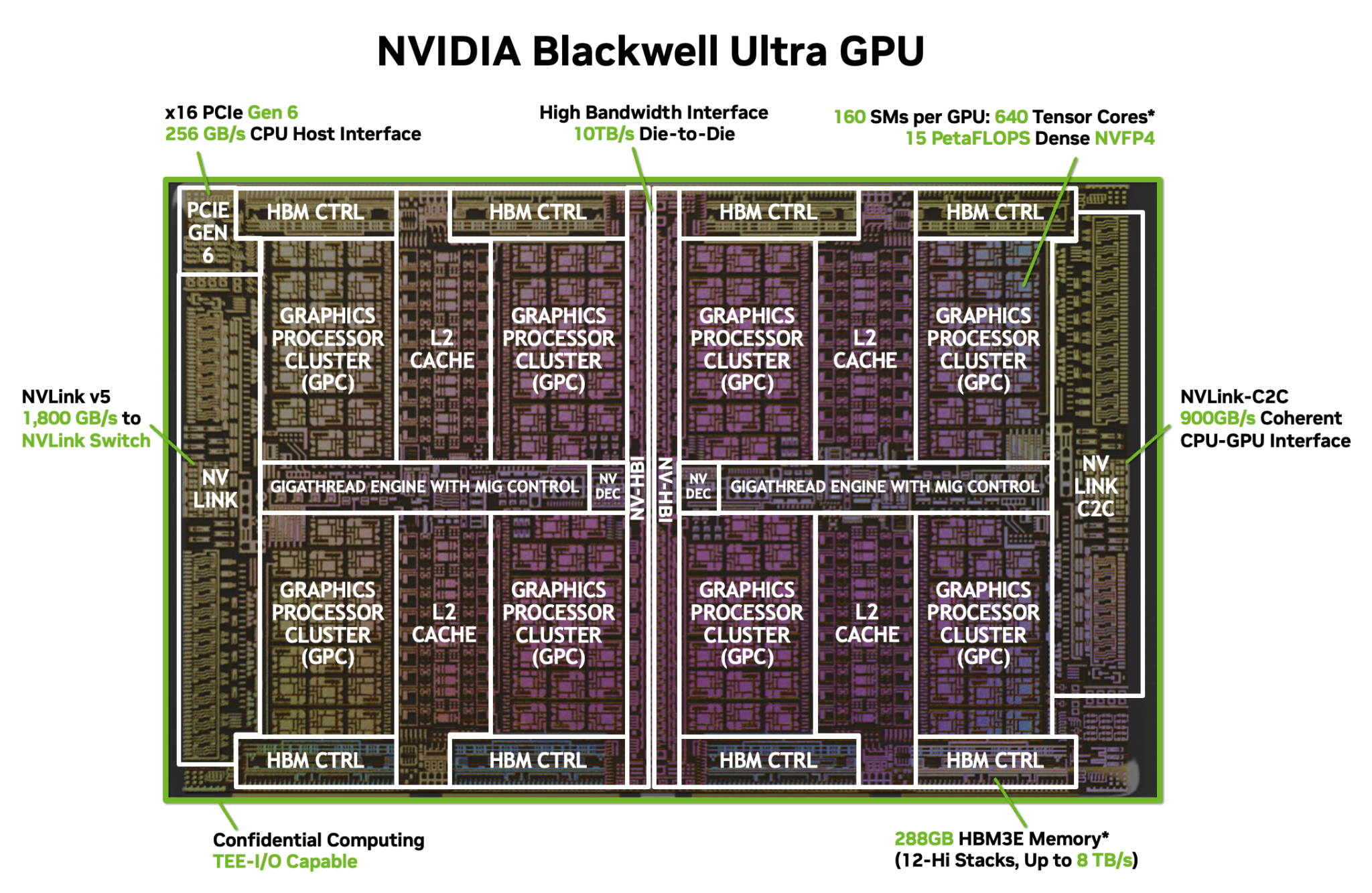
That difference becomes critical when you're training an artificial intelligence model. AI doesn't work through rules written by programmers. It learns by processing enormous quantities of data — billions of examples — adjusting its internal calculations until it can recognise patterns, generate text, diagnose diseases, or predict protein structures. When given a task, a GPU will break it into smaller subtasks and use its parallel processing capabilities to distribute the workload across thousands of cores, completing tasks more efficiently.
GPU performance has increased roughly 7,000 times since 2003, and price per performance is 5,600 times greater, according to Stanford's Human-Centered AI group. Without GPUs, the AI revolution simply would not have happened. Training the models behind tools like ChatGPT, the AI systems diagnosing cancer from scans, or the models predicting climate patterns — all of it runs on GPUs.
And NVIDIA's Blackwell GPU — with its 208 billion transistors, its second-generation transformer engine, and its capacity to power AI training at a scale previously unimaginable — sits at the very top of that stack. It is the most powerful processor chip available, and NVIDIA is positioning it as the processor for the generative AI era.
It bears David Blackwell's name because the mathematics inside it — the probabilistic reasoning, the dynamic programming, the statistical decision theory — traces its lineage, in significant part, directly to his work.
A Legacy That Outlasted Its Time
NVIDIA has a tradition of naming its GPU architectures after pioneering scientists. Thus far, the company has introduced a total of 16 GPU microarchitectures, all named after famous inventors and scientists across multiple disciplines. Previous architectures have been named after figures like Tesla, Maxwell, and Hopper. Blackwell's granddaughter Leeza notes that David Blackwell is the only one in the list whose specific contributions were directly in the field of artificial intelligence — not adjacent to it, but foundational to it.
Yet for all that, his story is barely known outside of academic mathematics. His photograph is not in school textbooks. His name is not taught alongside Newton or Turing.
"For fundamental contributions to probability theory, mathematical statistics, information theory, mathematical logic, and Blackwell games, which have had a lasting impact on critical endeavours such as drug testing, computer communications, and manufacturing" — those were the words of his posthumous National Medal of Science citation, awarded in 2014, four years after his death.
He received it four years too late. But his ideas, embedded now in the silicon of the most powerful AI chips ever built, arrived right on time.
Why Representation in STEM Matters
When Leeza Blackwell discovered her grandfather's true legacy, she asked a question that should stay with all of us: if his story was well known, how would it change the trajectory of young people in our communities? We aspire to become what we can see. We see athletes and entertainers celebrated. We do not, often enough, see Black mathematicians celebrated — even when those mathematicians helped build the intellectual foundation of the modern world.
David Blackwell faced a system designed to exclude him at every turn. He was barred from Princeton, denied a job because of a chairman's wife's prejudice, and had to fight his way into every institution that should have welcomed him from the start. He responded not with bitterness, but with relentless curiosity, warmth, and an extraordinary body of work.
Known for his infectious laugh and strong martinis, Blackwell loved teaching perhaps even more than he loved problem solving. He once said he was "not interested in doing research" — he was "interested in understanding, which is quite a different thing." That distinction, the joy of understanding over the pressure to produce, is perhaps the most profound lesson he left behind.
🎬 A Film in the Making
Leeza Blackwell is now producing a documentary about her grandfather's life and legacy — a project she describes as far bigger, and more important to her, than any corporate recognition. She wants his story told to the communities he cared about most.
Game of Genius — The David Blackwell Story
Visit gameofgeniusfilm.com to Donate
The world's most powerful AI chip carries his name. Now it's time the world knew the man behind it.
Written by the Black Scientists & Inventors team.
Published by Black Scientists & Inventors Platform — Tech Pulse | © February 2026 | blackscientistsandinventors.com


