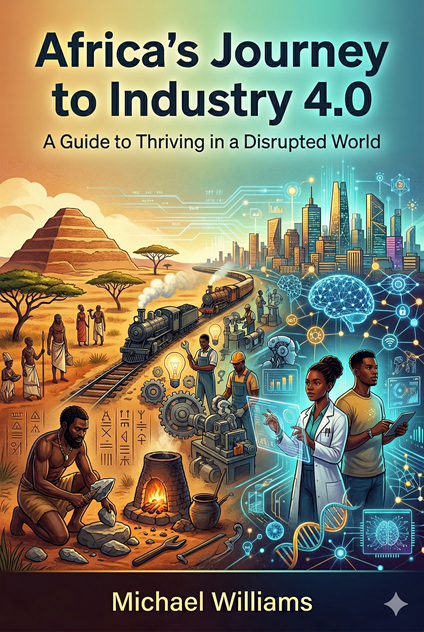
The oldest known stone tools on Earth were made at Lomekwi, on the western shore of Lake Turkana in present-day Kenya, roughly 3.3 million years ago — predating the genus Homo itself. From there, the Oldowan stone tool industry spread across East Africa from around 2.6 million years ago, followed by the more sophisticated Acheulean handaxe tradition, evidence of which has been found at Kokiselei in Kenya from around 1.76 million years ago.
The sophistication went beyond shaping stone. At Pinnacle Point on South Africa's southern coast, Middle Stone Age communities were heat-treating silcrete roughly 164,000 years ago — using fire as a controlled materials-engineering process to make stone easier to flake, long before comparable techniques appear anywhere else in the archaeological record. And at Blombos Cave, also in South Africa, archaeologists have uncovered a toolkit for mixing and storing ochre-based pigment dated to around 100,000 years ago: the earliest known chemistry workshop on the planet. Long before pyramids or written language, African communities were already practising materials science.
Part Two: The Engineering of Ancient Civilisations
Around 2670 BCE, the polymath Imhotep designed the Step Pyramid at Saqqara for the pharaoh Djoser — the earliest known large-scale cut-stone building on Earth, requiring solutions to quarrying, transport, load-bearing geometry and precision levelling with no precedent to draw on.
Further south and west, the Nok culture of central Nigeria was smelting bloomery iron by the middle of the first millennium BCE, sustaining furnace temperatures above 1,100°C using charcoal and forced air to reduce ore into workable metal. Later, the artisans of Igbo-Ukwu in south-eastern Nigeria produced extraordinarily intricate leaded-bronze castings using the lost-wax technique — evidence of a metallurgical tradition that developed independently of outside influence, and to a level of technical precision that still impresses metallurgists today.
Part Three: The First and Second Industrial Revolutions
The transatlantic slave trade was a human catastrophe that sought, among everything else it stole, to erase intellectual contribution. It could not succeed. The pattern begins earlier than is often told, and closer to Jamaica than to Massachusetts. In 1769, Dugald Clarke — a free person of colour working as an engineer in the parish of St Thomas in the East, Jamaica — produced a patent design for a steam-driven mill, decades before sugar estates across the Caribbean began adopting steam power in earnest (most continued to rely on animal, water or wind power to crush cane well into the nineteenth century). Clarke's surviving patent drawings, reproduced in the historian B.W. Higman's scholarship on Jamaican technology, document a free Black engineer working directly at the frontier of the same steam technology that would soon transform industry across the British Atlantic. In 1772, the Jamaica Assembly passed a private act granting Clarke legal rights and privileges equivalent to those of an English subject — a rare, if narrow, official recognition of his expertise within a colonial legal system built around racial hierarchy. It did not protect him from what came after: Clarke later fell into debt and died in a Kingston debtor's prison, at an unrecorded date. His story belongs here not despite that ending but because of it — a reminder that recognised technical brilliance offered no lasting security to a free Black engineer in eighteenth-century Jamaica.
As the First Industrial Revolution mechanised the world with steam and iron a generation later, Black inventors kept solving its most dangerous problems. In 1872, Elijah McCoy patented an automatic lubricator that allowed steam engines to be oiled continuously while running, sparing workers from stopping locomotives to lubricate them by hand. Railway safety was transformed again by Andrew Jackson Beard, born into slavery, who lost a leg while trying to manually couple two moving railroad cars. Beard's response was to invent the Jenny Coupler in 1897 — an automatic coupling device so effective, and so clearly life-saving, that it became mandatory under the US Safety Appliance Act.
The shoe industry underwent its own revolution at the hands of Jan Ernst Matzeliger. Born in Paramaribo, Suriname, in 1852 to a Dutch engineer father and a formerly enslaved mother, Matzeliger emigrated to the United States and settled in Lynn, Massachusetts, then the centre of American shoemaking. Lasting — joining the leather upper of a shoe to its sole — was the one step in shoemaking that stubbornly resisted mechanisation; skilled hand-lasters could shape perhaps fifty pairs a day. Working largely in secret over years of trial and error, Matzeliger patented a lasting machine in 1883 capable of producing several hundred pairs a day, matched to a far more consistent standard than any hand-laster could manage. It collapsed the cost of shoes across the United States and, in doing so, reshaped an entire industry — a contribution contemporaries would later compare to Edison's impact on lighting.
As the Second Industrial Revolution brought electricity, mass production and modern chemistry, Dr George Washington Carver, born into slavery in Missouri, saw that decades of continuous cotton farming were exhausting Southern soil. He promoted crop rotation using peanuts and sweet potatoes to restore nutrients, then developed hundreds of practical uses for those crops to give farmers a market for them, testifying before the US Congress on the subject in 1921. In medicine, Dr Percy Lavon Julian achieved the first total synthesis of physostigmine in 1935, producing an effective glaucoma treatment, and later devised an economical method of synthesising cortisone from soy plant sterols — dramatically cutting the cost of a drug that brought relief to millions living with rheumatoid arthritis.
Part Four: The Third Industrial Revolution
The digital age was drafted, in no small part, by Black engineers. Dr Mark Dean, the first African American to be named an IBM Fellow, led the team that developed the Industry Standard Architecture (ISA) bus in 1980 — the technology that let personal computers connect to printers, scanners and other peripherals — and holds three of the original nine patents underpinning the IBM PC.
As computing turned to graphics, Dr Marc Regis Hannah co-founded Silicon Graphics Inc. (SGI) in 1982 and led the development of affordable 3D graphics workstations, pulling the price of serious 3D rendering down from the hundreds of thousands of dollars to a fraction of that. The technology became the backbone of the visual-effects industry, powering films from Jurassic Park to Terminator 2.
Telecommunications was transformed by Dr Marian Croak, who joined AT&T Bell Laboratories in 1982 and went on to invent core elements of Voice over Internet Protocol (VoIP) — the technology that converts voice into digital data and underpins internet calling worldwide. She holds more than 200 patents and also developed the text-to-donate system used to raise tens of millions of dollars for disaster relief efforts, including after the 2010 Haiti earthquake.
Nuclear engineering owes a debt to Dr Henry Thomas Sampson Jr, the first African American to earn a PhD in nuclear engineering in the United States, awarded in 1967. In 1971, Sampson co-invented, with George H. Miley, the gamma-electric cell — a device that converts gamma radiation into high-voltage electrical output, with applications in powering equipment shielded from nuclear reactors and in radiation detection. (Sampson's invention is sometimes wrongly credited online with making the modern cellphone possible; he addressed the myth directly during his lifetime, noting plainly that he did not invent the cellphone. His real achievement — pioneering work in nuclear-radiation power generation as a Black scientist in 1960s America — needs no embellishment.)
And in Scotland, Sir Godfrey ‘Geoff’ Palmer arrived from Jamaica as a teenager in 1955 and went on to discover the barley abrasion process while researching at the Brewing Research Foundation, patenting the technique in 1969. Adopted by major UK brewers, it remains one of the defining breakthroughs in modern malting science. In 1989 Palmer became the first Black professor in Scottish history, at Heriot-Watt University, and was knighted in 2014 for services to human rights, science and charity, later serving as the university's Chancellor. Sir Geoff died in June 2025, having spent his later career as one of Britain's most prominent voices on race, education and colonial memory — a scientist whose legacy runs well beyond the laboratory.
A parallel thread of British innovation runs through Tim C.P. Tavares, born in Jamaica in the 1950s and educated in England, who completed a first-class chemistry degree at the University of London before earning a PhD in materials science and electronics at Imperial College London. In the 1980s, Tavares founded Basis Volume, a materials research company that built an estimated six-year lead over rivals working on high-temperature superconductivity — materials capable of carrying electric current with zero resistance once cooled below a critical temperature — alongside work on fuel cells and solid-state chemical sensors that found their way into more affordable hospital scanning equipment. His team developed what was described as the world's first high-temperature superconducting tube, put on public display at London's Science Museum in the late 1980s; the wider technology has since found application in medical imaging, high-power motors and maglev train systems. Tavares carried the same instinct — that powerful technology should be made as widely available as possible — into computing, founding B-Lux, South London's first Linux users' group, at a time when open-source software was still a niche technical movement rather than the industry standard it has since become.
“Better science makes better.” — Sir Geoff Palmer
Part Five: The Fourth and Fifth Industrial Revolutions
We are living through the Fourth Industrial Revolution — defined by artificial intelligence, robotics and the merging of physical and digital systems — and stepping into a Fifth, centred on human-machine collaboration, bio-innovation and sustainability.
In robotics, Dr Ayanna Howard spent twelve years at NASA's Jet Propulsion Laboratory helping design the next generation of Mars rovers before founding Zyrobotics, applying child psychology and neuroscience to build therapeutic robotics for children with special needs. In AI ethics, Dr Joy Buolamwini's 2018 ‘Gender Shades’ study at the MIT Media Lab found that leading commercial facial-recognition systems misidentified darker-skinned women at error rates as high as 34.7 per cent, against just 0.8 per cent for lighter-skinned men. The research, which prompted IBM and Microsoft to revise their systems, put the term ‘algorithmic bias’ — and Buolamwini's own coinage, the ‘coded gaze’ — into public consciousness; she went on to found the Algorithmic Justice League. Elsewhere in AI, organisations such as Black Women in Artificial Intelligence, founded by Angie Bush, are working to ensure diverse voices help shape the technology's direction.
In medicine, Dr Hadiyah-Nicole Green, who lost an aunt and uncle to cancer, developed a method using laser-activated gold nanoparticles to destroy cancer cells while sparing healthy tissue — publishing a 2014 study demonstrating complete tumour regression in mice after a single treatment lasting just ten minutes. In pharmaceuticals, the Kenyan chemist Dr George Njoroge led the Merck research team that discovered Victrelis (boceprevir), the first protease-inhibitor drug for hepatitis C, approved by the US FDA in 2011; he holds more than one hundred US patents and was inducted into the American Chemical Society's Hall of Fame as a Hero of Chemistry in 2012.
And innovation continues to arrive from unexpected angles. Tessema ‘Dosho’ Shifferaw, an Ethiopian engineering student in California, patented the resistance-rod home gym in the mid-1980s that became the Bowflex — one of the best-selling pieces of fitness equipment in American history. In 2011, in response to the Gulf of Mexico oil spill, Shifferaw turned his attention to marine engineering, developing a patent-pending containment concept designed to funnel oil away from a ruptured deep-sea well using the buoyancy of oil itself.
Why This Still Matters
If historical erasure sounds like a problem safely confined to the past, consider the present. In 2022, the Royal Society of Chemistry's Missing Elements report found that of 575 chemistry professors working in UK universities, only one identified as Black — despite Black students being comparatively well represented at undergraduate level. The report described exclusion and marginalisation as “normalised” for many Black and minority-ethnic chemists throughout their careers, citing weaker access to research funding, lower average pay and fewer opportunities for progression as systemic barriers, not historical relics.
These are not the lingering effects of discrimination that ended long ago. They are outcomes of systems still operating today. Telling the story of Black scientific achievement, from Lomekwi to the laboratory, is not an act of nostalgia. It is a corrective — and a reminder of exactly how much has already been contributed against exactly these odds.
Let the Story Continue
This history of innovation, spanning 3.3 million years, now has a new home on the Black Scientists & Inventors (BSI) platform, drawing on records assembled through the Global Black Inventor Research Project. The platform's newly launched Innovation Vault is an interactive experience allowing learners to explore key moments in this story, from the first stone tools of East Africa to the frontiers of artificial intelligence today.
The mission is simple: to make sure the next generation of Black scientists and inventors understands that they are not interlopers in the story of human progress. They are its inheritors — heirs to a tradition millions of years old, and one that has never stopped.
Last Notes:
This article inspired author Michael Williams to create a collection of music that forms the album From Flint to Algorithm — a sonic journey through Black innovation, from the earliest sparks of invention to the age of artificial intelligence.

Each track tells the story of Black scientists and inventors whose ideas reshaped the world. Drawing inspiration from the Black Scientists & Inventors Platform, the album moves fluidly through hip-hop, R&B, dancehall, reggae, amapiano, calypso, afrobeats, jazz, old‑school soul, and UK grime and drill.
You can listen to a free preview of every track, then purchase the full album — or simply your favourite songs — as MP3 downloads to keep and play on any device.


