Hardware Pioneers 2026: A New Generation Discovers the Future of IoT and AI
Other • Reviewed July 5, 2026
★ ★ ★ ★ ★
By Loben Henry, M Williams, and the Tech Pulse BSI Team
June 2026 marked the latest instalment of the Hardware Pioneers event, which took place at ExCeL London. I was fortunate enough to receive several complimentary tickets from the organisers, and I decided to send along several members of the Black Scientists and Inventors team, including two of my mentees.
This was the first time the mentees would be attending the event, but it came at a great time: they are both carrying out an IoT/AI project with us. I thought this would be a fantastic space for them to conduct research, being in close proximity to industry leaders in both IoT and AI. To ensure they were fully involved across the two days, I set them the task of writing an evaluation report on the new technologies they discovered.
What follows is a synthesis of Loben Henry's findings — a glimpse into the future of hardware through fresh eyes.
First Impressions: A World of Connected Things
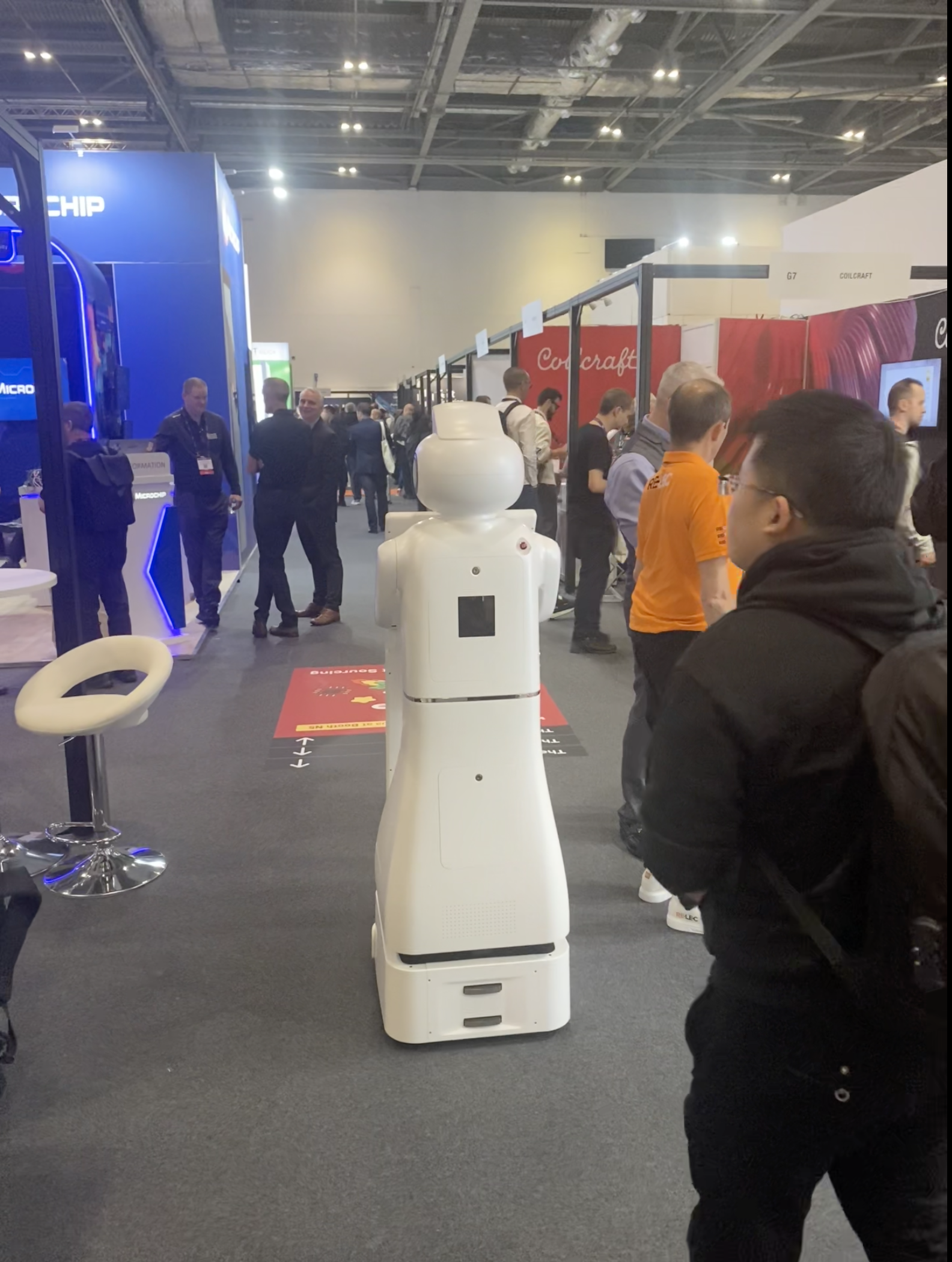
Attendees mingling alongside an automated robot on the bustling show floor)
For my mentees, this was their first taste of a major hardware exhibition, and it did not disappoint. The show floor featured a wide range of companies, from established technology firms to ambitious start-ups. The exhibits showcased the latest developments in Internet of Things (IoT) devices, sensors, connectivity solutions, embedded hardware, and edge computing. Live demonstrations and talks given by industry professionals created an atmosphere of palpable innovation.
Among the stands, recurring themes quickly emerged: IoT platforms and smart devices designed to connect to smart homes, industrial monitoring, and asset tracking. There was also a strong focus on advanced sensors capable of environmental monitoring, motion detection, and predictive maintenance.
Edge AI: The Quiet Revolution
One of the most significant highlights of the event was the emphasis on Edge AI, which involves processing data physically closer to devices instead of relying solely on cloud computing. This shift promises faster decision-making, reduced latency, improved privacy, and lower bandwidth requirements.
A particularly memorable talk, delivered using black silent tech wireless headphones for sound isolation, introduced the concept of "lazy learning". Defined as a strategic engineering virtue, the core principle is: "Don't train what you don't have to". The idea is elegantly pragmatic; instead of training machine learning models from scratch, developers should leverage what the system already knows from sensor specifications or workflow context, learning only the missing pieces of intelligence.
On display were next-generation AI chips, embedded systems, and edge devices capable of carrying out complex AI tasks locally. One standout was the NVIDIA Jetson platform, which featured Samsung memory chips on circuit boards designed specifically for embedded AI applications.
Real-World Applications: From Farms to Factories
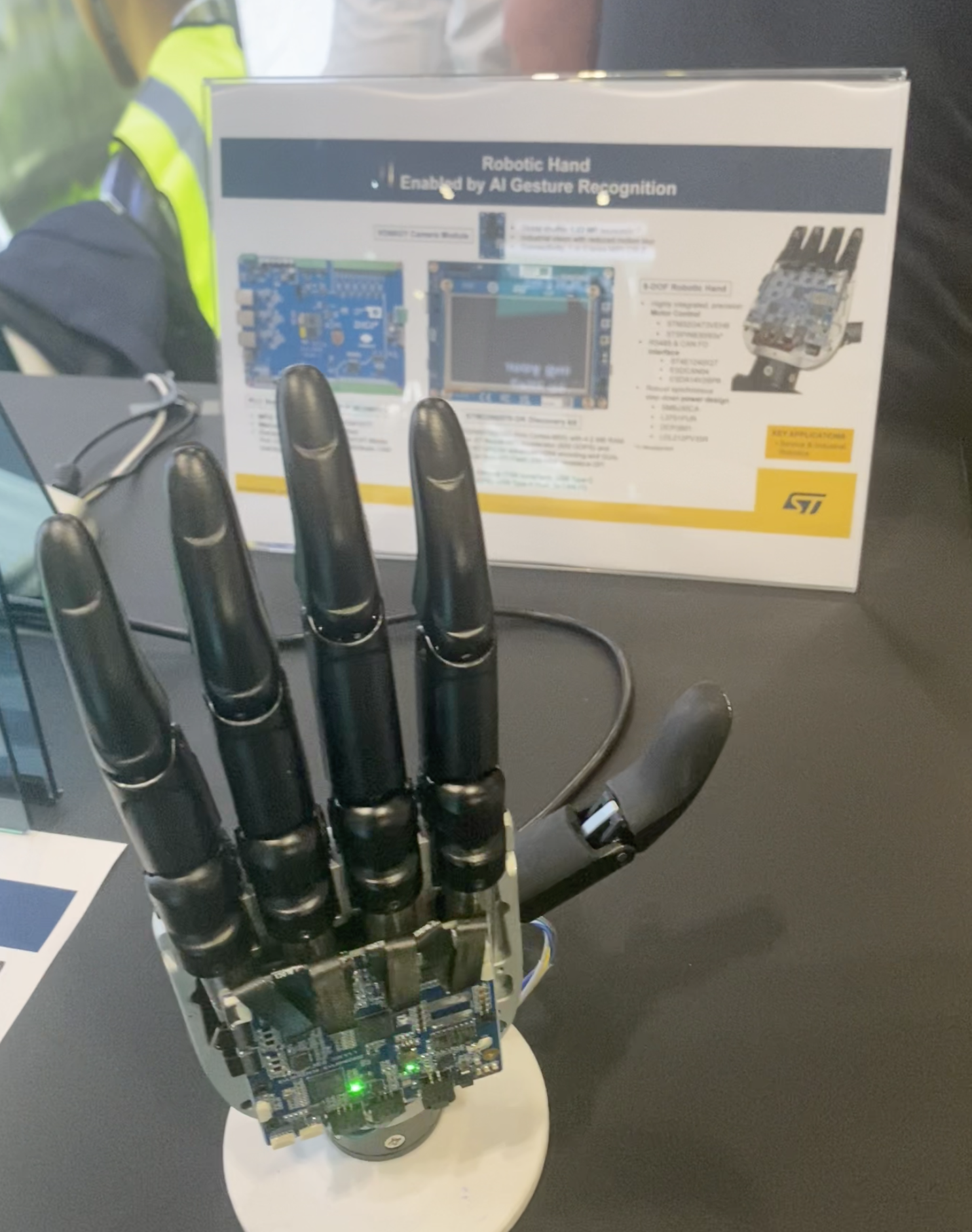
A robotic hand enabled by AI gesture recognition)
The potential applications for AI hardware and edge computing are vast and varied:
- Healthcare: Portable diagnostic devices can analyse patient data in an instant. Wearable patient monitoring systems now track vital signs such as ECG, heart rate, and heart rate variability. For patients with conditions such as arrhythmias or those prone to falls, these systems send immediate alerts to healthcare personnel. Handheld AI-powered ultrasound scanners can also analyse images and detect patterns without requiring an experienced, trained operator.
- Transportation: Autonomous systems can make fast decisions without network delays. Advanced driver assistance systems use AI to process LIDAR, radar, and camera signals for lane-keeping, emergency braking, and object recognition. In-cabin cameras can even monitor drivers' facial expressions to detect drowsiness.
- Manufacturing & Logistics: Intelligent sensors detect anomalies to help increase operational efficiency. On production lines, vision systems equipped with AI can detect manufacturing errors much earlier than before. Autonomous mobile robots (AMRs) are increasingly being used for picking and sorting tasks to lower the need for human labour and reduce errors. Navigating autonomously using LIDAR and cameras, these AMRs employ simultaneous localisation and mapping (SLAM) technology to build maps, optimise routes, and avoid obstacles in real time. Furthermore, intelligent asset trackers monitor high-value or fragile items, triggering alerts if temperature, vibration, or other environmental conditions pass a set threshold.
- Agriculture: AI-equipped drones and IoT sensors monitor soil conditions, moisture levels, crop health, and pest activity. This automates irrigation and fertiliser use to boost crop yields.
- Smart Cities & Homes: Edge AI cameras in smart cities adjust traffic signals in real time to ease the flow of traffic. In smart homes, motion detection surveillance systems can now distinguish between animals, vehicles, and humans, lowering the number of false alerts.
The Building Blocks: Connectivity and Modules
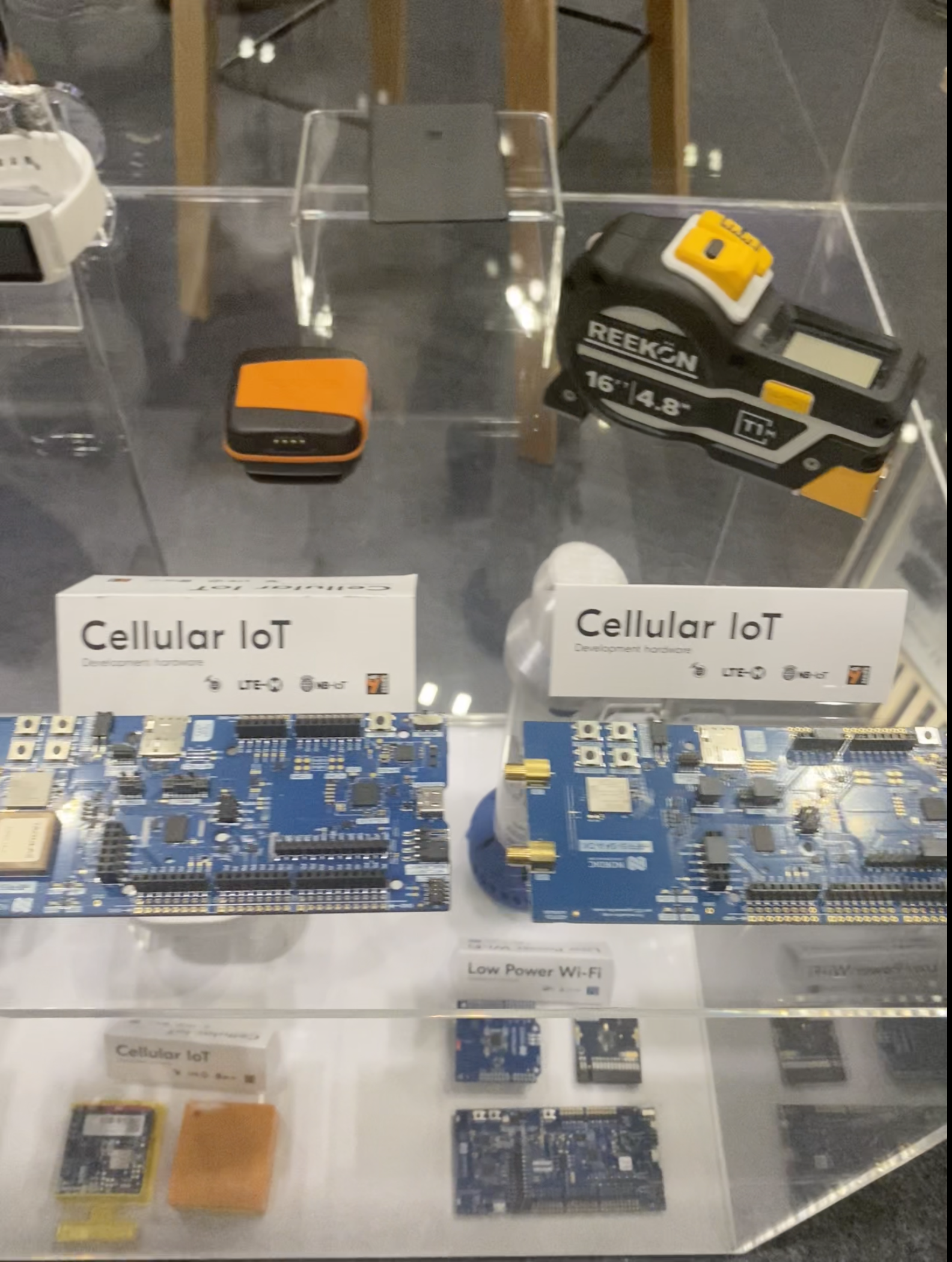
Cellular IoT development hardware on display)
For all this intelligence to function, robust connectivity is essential. Several solutions were highlighted to address these design challenges:
SimCom, a company with a history in IoT modules, introduced two new smart AI modules incorporating an AI core, MCU, and Wi-Fi/Bluetooth in one compact package. By integrating AI processing, connectivity, and multimedia support into one platform, this method lowers complexity and reduces development cycles.
Cellular IoT was another major theme. The Nordic nRF915 development kit was on display, providing a complete cellular IoT system-on-chip solution built for real-world deployments. It supports multi-mode LTE-M, NB-IoT, and DECT NR+. LTE-M operates on an LTE/5G network, providing speeds of 1 Mbit/s uplink and downlink (LTE Cat M1), which is fast enough for most IoT devices while utilising power-saving features for extended battery life.
Bluetooth Low Energy (BLE), introduced in 2010 for low power consumption and battery-powered devices, continues to evolve. BLE can achieve a range of 1 kilometre using a method of data recovery called forward error correction, which increases range without having to increase transmit power. (It is important to note that the compatibility of Bluetooth Low Energy and classic Bluetooth is non-existent, as they cannot communicate with each other).
Pure LiFi demonstrated technology that transmits and receives data using the light spectrum. The advantages are compelling: the spectrum of light is 2,600 times larger than RF, offering greater data rates. It also has a near-zero EM footprint, meaning there is no digital signature, so transmissions cannot be detected by outside parties.
Display Technologies and Components
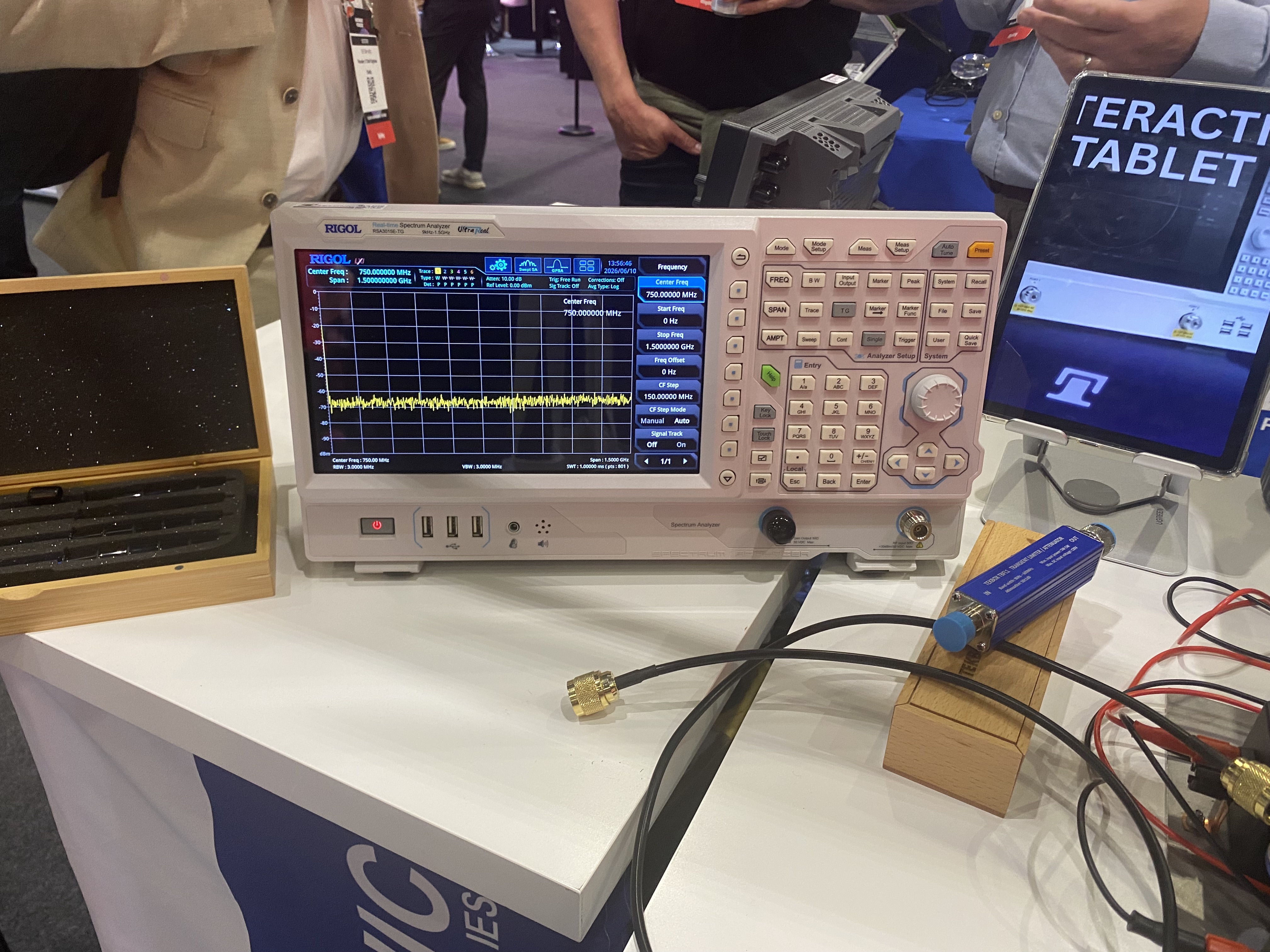
A RIGOL spectrum analyser and interactive tablet showcasing hardware testing capabilities)
Midas Displays showcased an impressive variety of electronic display modules:
- TFTs (Thin Film Transistors): Available in landscape and portrait orientations, featuring touch screens with resistive, hover, and gesture technologies. They offer multi-touch options, 6 and 12 o'clock viewing angles, and include hyper amorphous silicon models which are sunlight readable. Interface options include analogue, digital, LVDS, DSI, MIPI, and HDMI.
- LCDs (Liquid Crystal Displays): Built with reflective, transmissive, or transflective types. Mechanical construction formats include Chip on board, Chip on glass, and automated bonded types.
- OLEDs (Organic Light Emitting Displays): These displays offer standard colours like white and yellow on a black background, with up to 100k hours of half brightness, very low power consumption, and all-round viewing angles.
Garnnerosborne caught the mentees' attention for their PCB assembly and manufacturing capabilities across a wide range of industries, including audio and broadcasting, IoT, medical, aerospace, seismology, defence, measurement, and power supply.
Design Challenges and Prototyping
Even the most experienced designers can struggle to put together a successful AI-powered design, as many iterations and changes in product specifications are often demanded. Prototyping tools and development kits were abundant at the show, demonstrating how fast hardware ideas become fully functional prototypes.
Renesas featured numerous development boards, including the HvPAK SLG47105 for motor control and the ForgeFPGA evaluation board for their RA microcontrollers, alongside a GreenPak introduction kit used for mixed-signal matrix design. Microchip offered interactive demonstrations that included a model smart home and a face recognition security system featuring liveness detection.
In the realm of consumer wearables, precision timing components are vital. Maintaining synchronisation among sensors, wireless radios, and edge AI functions ensures deterministic performance. This guarantees the system is reliable and produces the exact same output each time for latency-sensitive features such as voice activation, biometric signal capture, motion tracking, and spatial mapping.
A World Beyond the Show Floor
AI and IoT systems are no longer defined by capability alone, but by their resilience under real-world conditions where deployment complexity determines true innovation. Recent global developments highlighted include:
- Taiwan becoming a live testbed for centimetre-level IoT positioning.
- Amazon accelerating its push into space connectivity.
- Nigeria deploying 50,000 solar AI streetlights, turning public lighting networks into an IoT-driven edge AI platform.
Reflections and Takeaways
For my mentees, the Hardware Pioneers event was highly informative and of great value. It provided a broad scope of current industry trends in hardware innovation and gave practical insight into what is currently possible.
They were able to expand their awareness of microcontrollers, communication protocols, and sensors, gaining a better understanding of how these ecosystems are built and integrated in real-world settings. They also became more acutely aware of the importance of scalability, reliability, and security in modern hardware design.
As one mentee concluded in their report: "This experience has strengthened my interest in electronics and embedded systems, and I will continue to broaden my knowledge of the area."
For the next generation of scientists and inventors, events like this are not just about observing the future — they are about acquiring the tools to build it.


