Pioneer Reviewing Pioneers:
Course • Reviewed July 8, 2026
★ ★ ★ ★ ★
Inventor Pauline Straker on the Black Scientists and Inventors: Pioneers of Innovation course
BSI Tech Pulse — Course Spotlight
When we assembled our pilot group of twelve learners — a mix of adults and young people — to test-drive the Black Scientists & Inventors: Pioneers of Innovation course, we knew we'd get honest, considered feedback. What we didn't expect was quite how personal the experience would become for one participant in particular: Pauline Straker.
Pauline isn't just a course pilot. She's an inventor in her own right, celebrated for her work designing African wigs and costumes, and featured among the innovators profiled in Black Scientists & Inventors: Book 2. Having one of our own featured inventors sit inside the course, test its content, stress-test its technology, and hand back a considered assessment was a genuine privilege — and a bit of a full-circle moment for the platform.
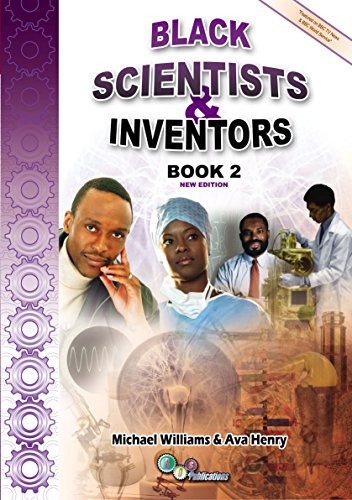
Pauline featured in the best-selling Black Scientists & Inventors book.
Rewriting the Textbook
Pauline was candid about where her understanding of scientific history had started: shaped almost entirely by the familiar names most of us grew up with — Christopher Columbus, Alexander Graham Bell, and the standard roll call of celebrated European explorers and inventors. The course, she told us, opened up a much longer and richer story — one stretching from Imhotep, widely regarded as history's first named scientist, right through to Dr Hadiyah Nicole Green's pioneering work on laser-activated nanoparticle cancer treatment. Along the way she encountered Dr Benjamin Banneker, Dr Charles Drew's foundational contributions to blood banking, and Katherine Johnson's calculations behind America's first crewed spaceflight.
A Personal Connection to Self-Taught Genius
What struck a particular chord with Pauline was the course's attention to self-taught scientists — a theme that mirrored her own journey as a largely self-taught designer, building her craft through observation, practice and independent learning. It's a link she summed up by pointing to a favourite Marcus Garvey line about never ceasing to educate oneself.
That thread pulled her, above all, towards Benjamin Banneker. She was struck by the image of a 22-year-old Banneker borrowing a pocket watch, taking it apart to understand its mechanism, and carving a working wooden clock from what he'd learned — a clock that reportedly kept time for over four decades. She was equally taken by his later self-taught mastery of astronomy and mathematics, which led him to correctly predict a solar eclipse and publish his own astronomical almanacs, and by his role as assistant astronomical surveyor on the boundary survey of Washington, DC. For Pauline, Banneker's 1791 letter challenging Thomas Jefferson on the contradiction between liberty and slavery was the standout moment — intellect deployed not just to build, but to confront injustice.
She also flagged Dr James McCune Smith, who trained as a physician in Scotland after discrimination barred his path in the US, and went on to use statistical analysis to dismantle racist pseudo-science of his era — a powerful example, in her words, of science mobilised in service of truth and equality.
Beyond the Content: Testing the Platform Itself
Throughout the pilot, Pauline didn't just engage with the material — she put our Learning Management System through its paces, offering sharp, constructive feedback on functionality alongside her reflections on content. She also made regular use of our AI-powered Course Tutor when she hit snags, giving us valuable real-world insight into how learners actually use that support tool day to day. That combination of subject-matter engagement and technical scrutiny is exactly what a pilot group is for, and Pauline delivered it in spades.
Her Message to Future Learners
Pauline closed her assessment with a call to action of her own: encouraging others — young people especially — to take the course and find inspiration in scientists and inventors who look like them, while weighing up careers of their own in STEM.
As she put it in her own reflection:
"Benjamin Banneker's determination to learn and succeed despite significant obstacles is an inspiration to me. This course has broadened my understanding of scientific history and highlighted the contributions of individuals who are too often overlooked."
Ready to be inspired by scientists and inventors who look like you? 👉 Explore the Pioneers of Innovation course at blackscientistsandinventors.com
M, Williams, Course Tutor— BSI Tech Pulse


