PetraAI Sentry V1.3: The Self-Powered Guardian of Our Pipelines
Tool • Reviewed July 13, 2026
★ ★ ★ ★ ☆
By Daniel Teape. | Edited by M. Williams
Tech Pulse Review Section
One Small Device, One Giant Leap for Pipeline Safety
Let's start with a sobering thought. Beneath our feet, snaking through cities, countryside and seabeds, lie millions of kilometers of pipelines. They carry the oil and gas that keep our world moving — but they also carry enormous risk. When pipelines fail, the consequences can be catastrophic: environmental devastation, eye-watering financial losses, and, in the worst cases, loss of life.
Traditional inspection methods — periodic manual checks, scheduled maintenance, and reactive repairs — are simply not enough. By the time a problem becomes visible, it is often too late.
Enter the PetraAI Sentry V1.3. It sounds like something from a sci-fi thriller, and in many ways, it feels like one. Imagine a self-powered, always-on device that attaches to a pipeline, listens to its heartbeat, and predicts its future — all without ever needing a battery change. That, in essence, is what this device promises.
Meet the Founder: Jasmine Randolph

Before we dive into the technology, it is worth understanding the mind behind it. Jasmine Randolph is the Founder and Lead Inventor of PetraAI, an industrial technology firm specialising in Edge AI infrastructure for the global energy sector.
Her work sits at the intersection of three demanding fields: High Performance Computing, Acoustic Physics, and Blockchain-secured Compliance. It is an unusual combination, but one that has proved remarkably fruitful.
Randolph's core insight was to address what she terms the "Latency Gap" in traditional industrial sensing. Conventional monitoring systems often suffer from delays — between data collection and analysis, between detection and response. In the world of high-pressure pipelines carrying hazardous materials, those delays can be measured in environmental and human cost.
By integrating NXP-based Neural Processing Units (NPUs) with thermoelectric and kinetic energy harvesting, Randolph has demonstrated the feasibility of zero-maintenance, real-time forensic diagnostics in high-consequence environments. In simpler terms: she has built a device that never sleeps, never needs a new battery, and never stops watching.
Her work has bridged the gap between energy harvesting and edge-NPU diagnostics, effectively neutralising the risk of environmental disasters in high-density urban zones. She has moved the industry from a culture of "fixing what's broken" to one of Proactive Stewardship
What Is It, Exactly?
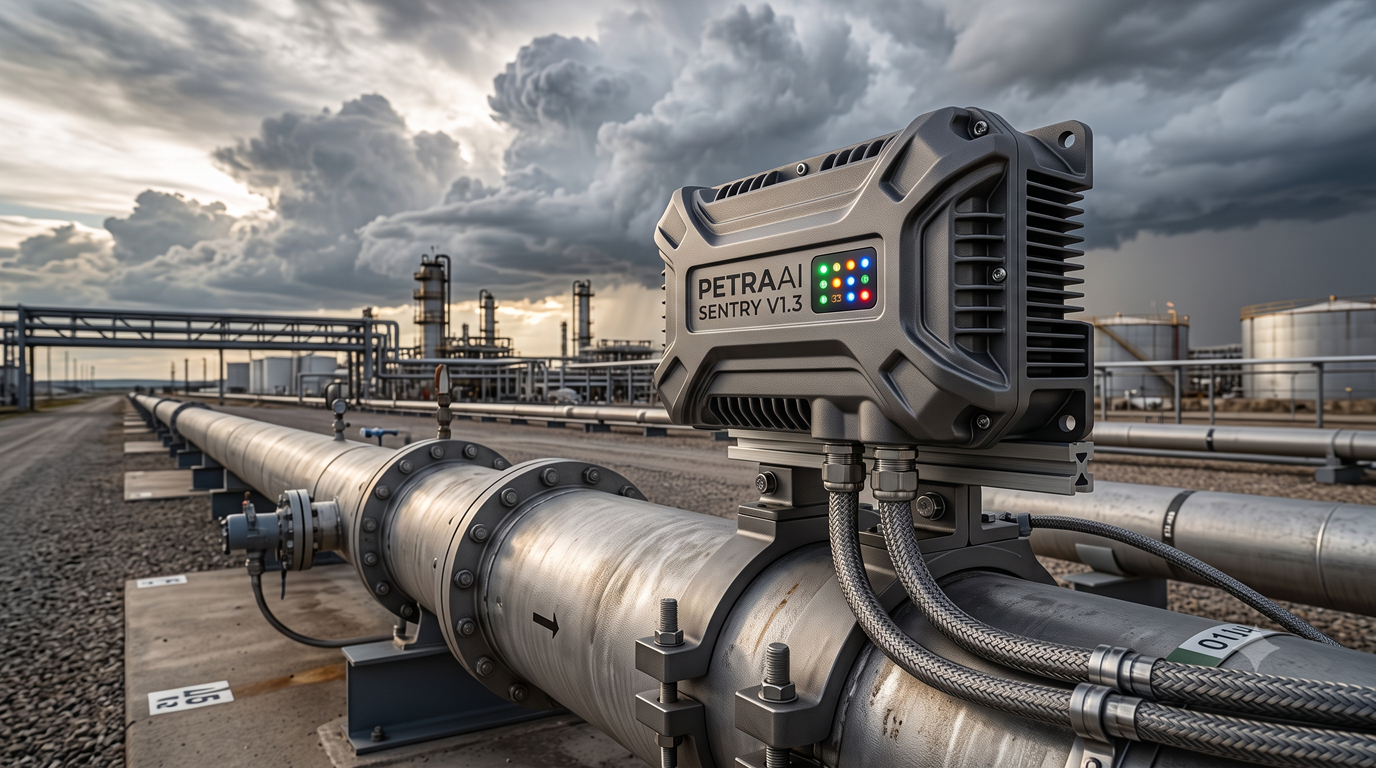
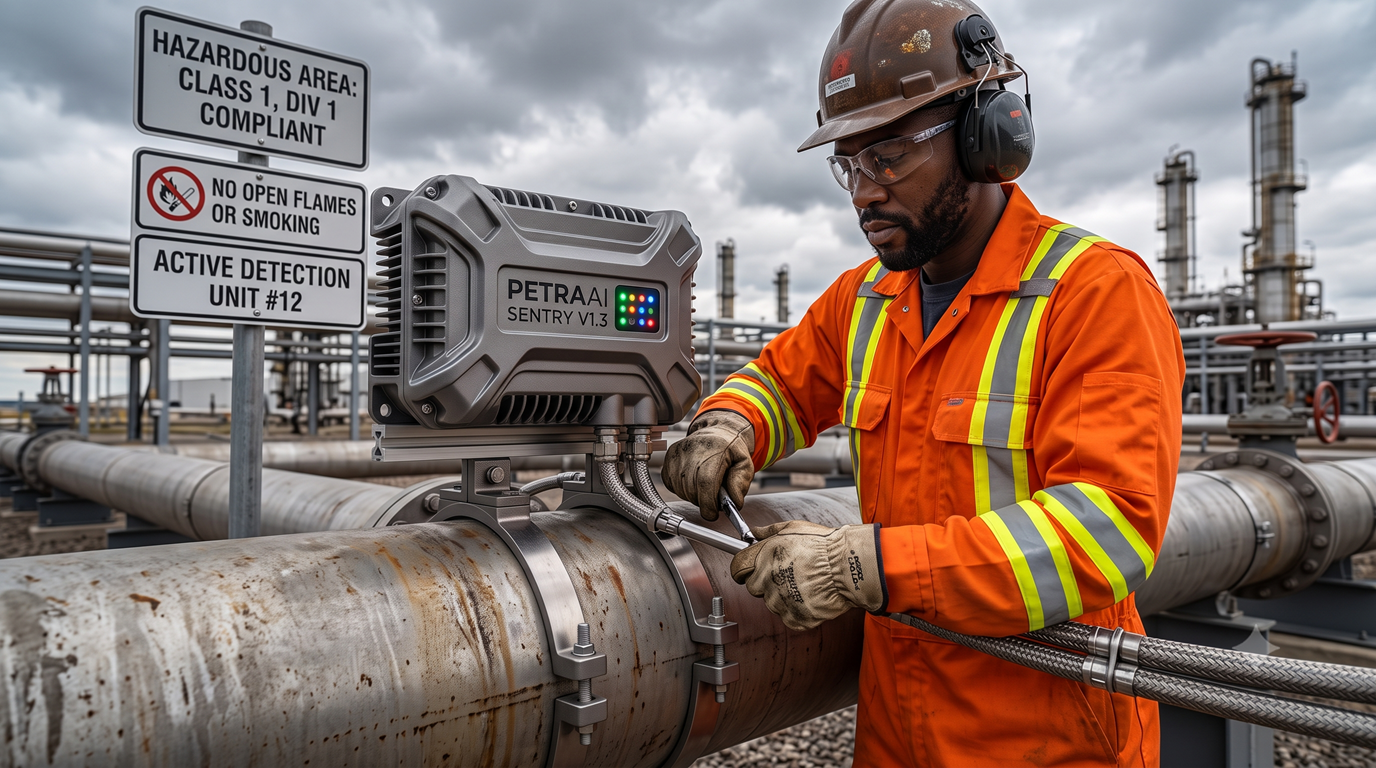
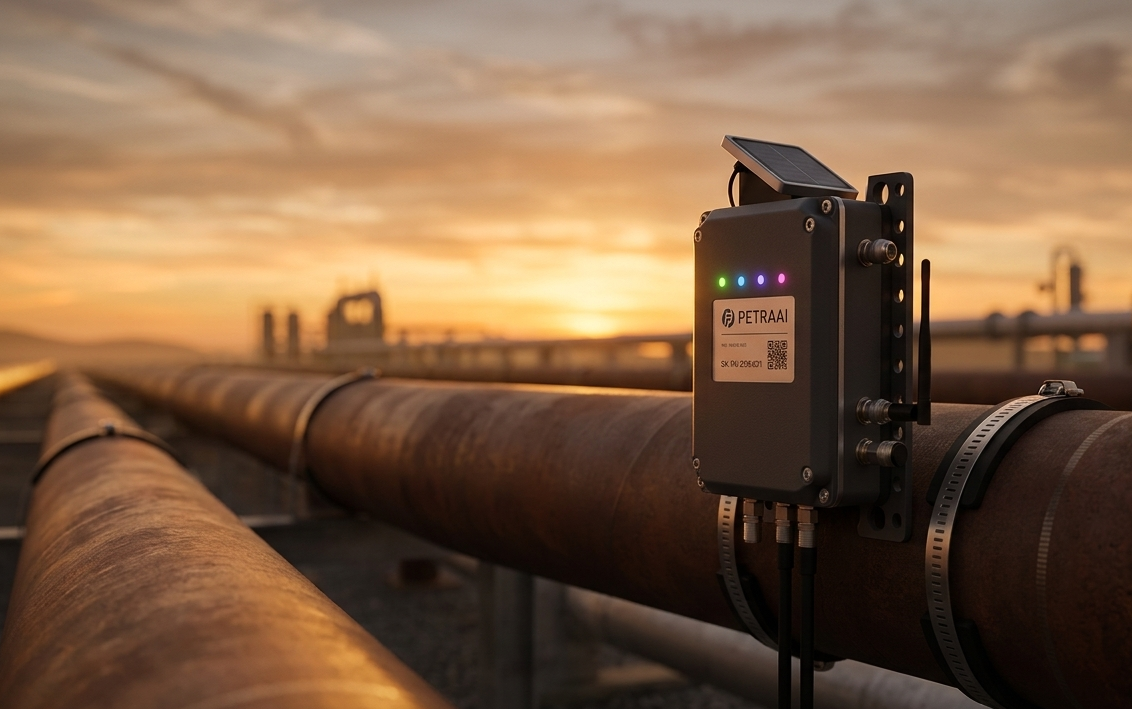
At its core, the Sentry V1.3 is an autonomous, non-invasive monitoring device designed for oil refineries and pipelines. It is roughly the size of a small lunchbox and attaches directly to the outside of a pipe using high-strength magnets and stainless steel tension straps.
Once installed, it does three extraordinary things:
It powers itself, harvesting energy from the heat and vibration of the pipeline itself.
It thinks for itself, running artificial intelligence on board to analyse data in real time.
It remembers everything, creating tamper-proof digital records of every event it detects.
The company behind it calls it "a transition from digital communication to Autonomous Asset Stewardship." Less poetically, it is the pipe's new best friend — and your new early-warning system.
No Batteries? No Problem
Perhaps the cleverest trick in the Sentry's arsenal is its power source — or rather, its lack of one.
Industrial IoT devices typically run on batteries. That means someone — usually a very cold, bored, and underpaid technician — has to trek out to remote locations every few months to replace them. Factor in thousands of miles of pipeline, often in deserts, tundra, or offshore platforms, and you begin to appreciate the problem.
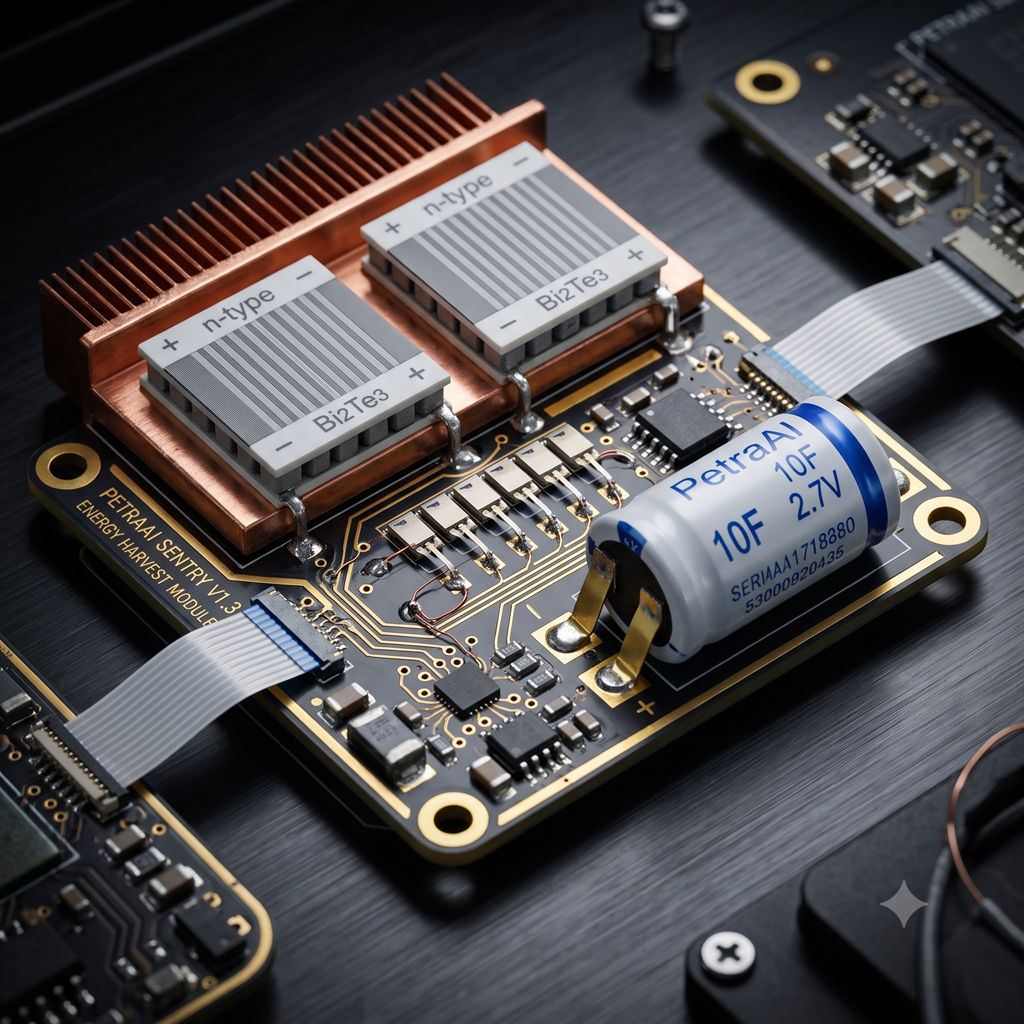
The Sentry sidesteps this entirely. The V1.3 achieves 100% battery-free autonomy through a dual-harvesting architecture:
Dual Bismuth Telluride Thermoelectric Modules (TEG) exploit the Seebeck effect: when there is a temperature difference across the modules, they generate electricity. As long as the pipeline is at least 10°C warmer than the surrounding air, the TEG modules produce power.
A secondary Kinetic Piezoelectric Harvester Element array captures energy from ambient pipe vibration and fluid flow. This allows the unit to boot natively even during zero thermal differential states — meaning it can start up from vibration alone.
The harvested energy is stored in a 10-farad supercapacitor buffer (rather than traditional batteries), which offers longer life, faster charging, and better performance in extreme temperatures.
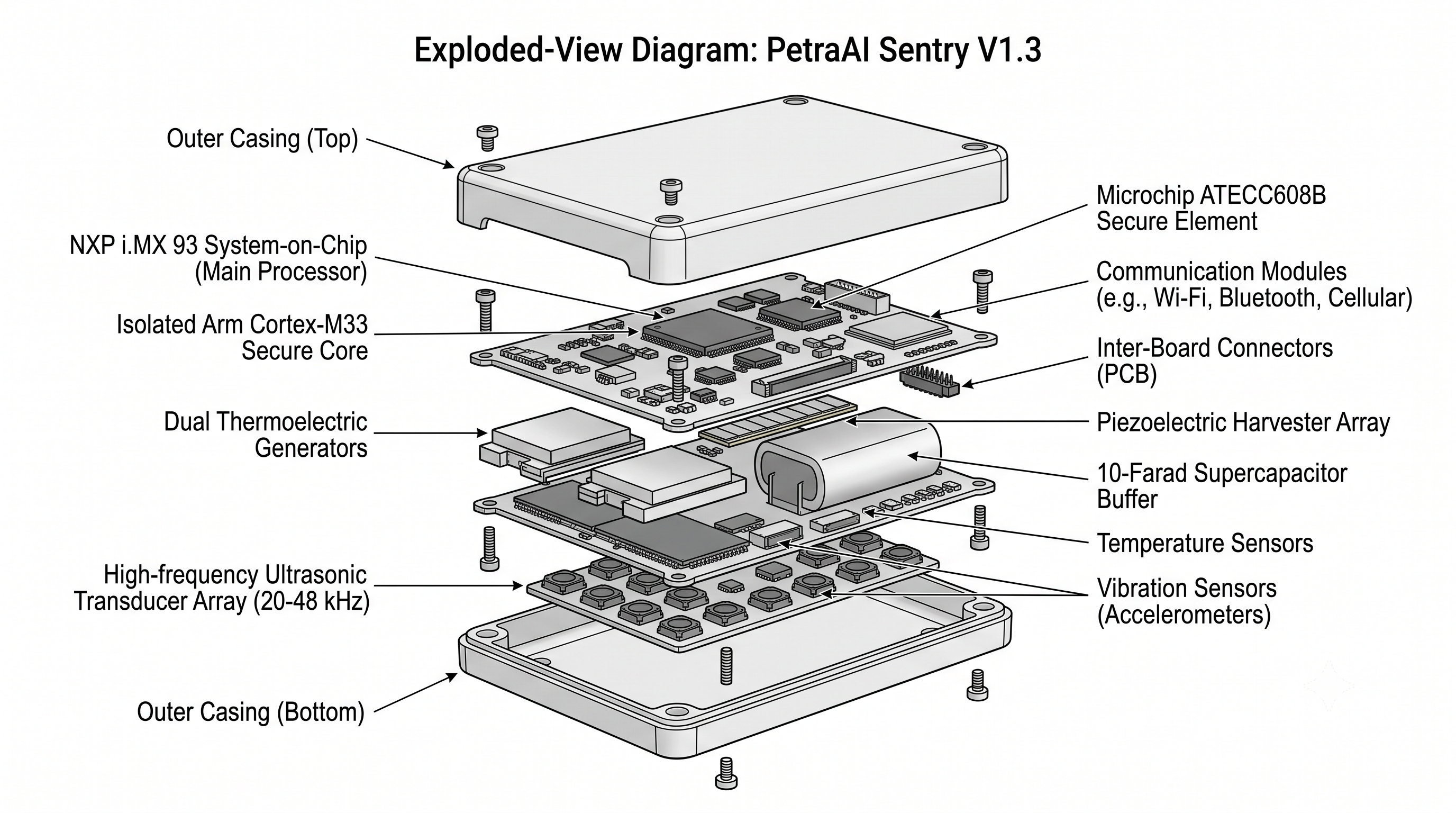
The rugged enclosure is not polycarbonate, as earlier prototypes used, but Anodized Aluminum 6061 T6 manufactured using High-Pressure Die Casting (HPDC) with internal encapsulation compound. This meets strict Class 1 Division 1 (C1D1) explosive environment standards — essential for safe operation in refinery and pipeline settings where flammable gases may be present.
The result? A device that can sit on a pipe for years, monitoring continuously, without a single battery replacement. That's not just clever engineering — it's a maintenance revolution.
The Brain Inside
Harvesting energy is impressive, but what does the device actually do with it?
Inside the Sentry is an NXP i.MX 93 System-on-Chip with a built-in neural processing unit (NPU). In plain English, this means the device has its own miniature brain capable of running artificial intelligence directly on board.
It continuously monitors the pipeline using a combination of:
High-frequency non-invasive ultrasonic transducers, calibrated tightly between 20 kHz and 48 kHz. Unlike traditional microphones, these transducers isolate micro-leak cavitation and structural fatigue while digitally suppressing low-frequency facility rattle — the background noise of pumps, motors, and general industrial activity.
Temperature sensors that detect thermal anomalies, such as insulation degradation or localised overheating.
Vibration sensors that pick up mechanical issues like pump imbalance or structural resonance.
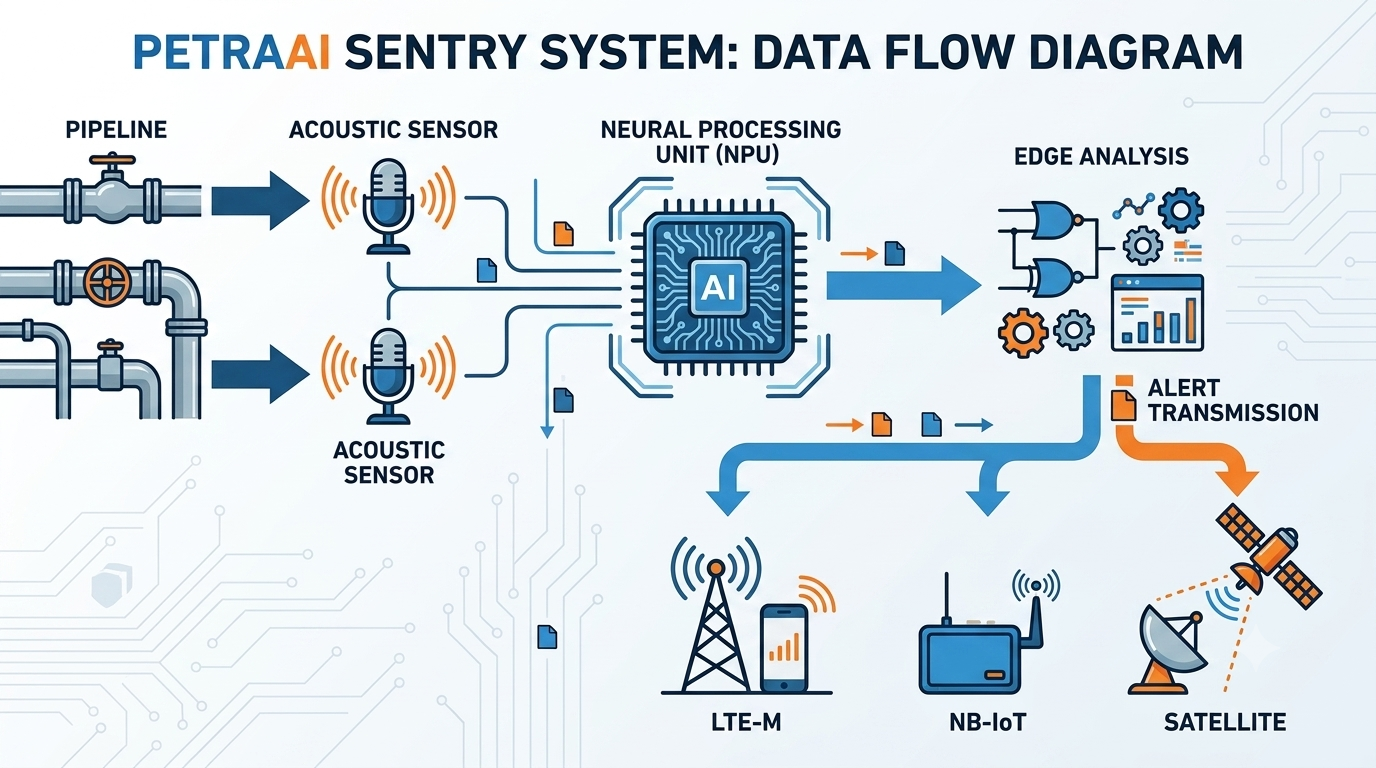
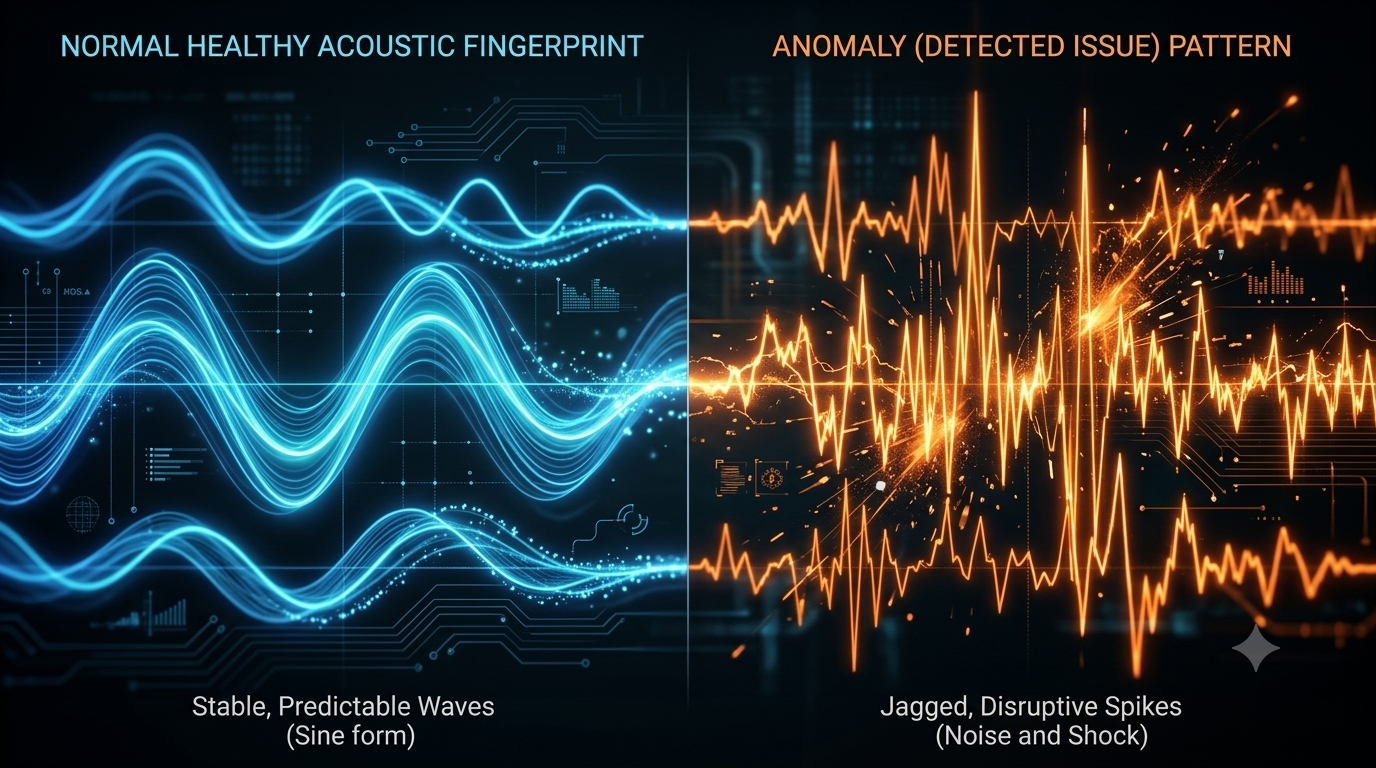
Instead of sending all this raw data to a cloud server somewhere (which would be expensive, slow, and impossible in remote areas), the Sentry processes everything locally. It creates what the company calls an Acoustic Neural Fingerprint — essentially a unique sonic signature of a healthy pipeline.
If the ultrasonic signature changes, the AI notices. It can detect the early stages of corrosion, fatigue cracking, or thinning steel — problems invisible to the human eye but audible to a sufficiently sensitive ear. The company claims the Sentry can predict catastrophic failures up to fourteen days before they occur.
That is not just predictive maintenance. That is pre-emptive maintenance.
The Trust Ledger: Solving the SCADA Gap

Here is an uncomfortable truth: safety data is only useful if you can trust it. In the world of industrial monitoring, this has long been a problem. The so-called SCADA gap refers to the disconnect between operational technology (the pipes and pumps) and information technology (the computers and networks). Data can be altered, lost, or — worst of all — manipulated.
The Sentry addresses this with a hardware-based SHA-256 Audit Shield ledger. The security architecture is particularly robust:
The SHA-256 hashing is executed on an asymmetric, isolated Arm Cortex-M33 real-time core — a dedicated processor that handles only security functions, isolated from the main application processor.
Cryptographic operations are secured via an onboard Microchip ATECC608B secure element, a tamper-resistant hardware chip that stores cryptographic keys and performs secure authentication.
Every event record generated by the device is cryptographically hashed, creating a unique digital fingerprint that proves the data has not been tampered with. For regulators, auditors, and safety inspectors, this is gold dust. It means the data is verifiable, immutable, and legally defensible.
The company calls this "Proactive Stewardship" — moving the industry from fixing what is broken to preventing breakage in the first place.
Communications: Staying Connected, Anywhere
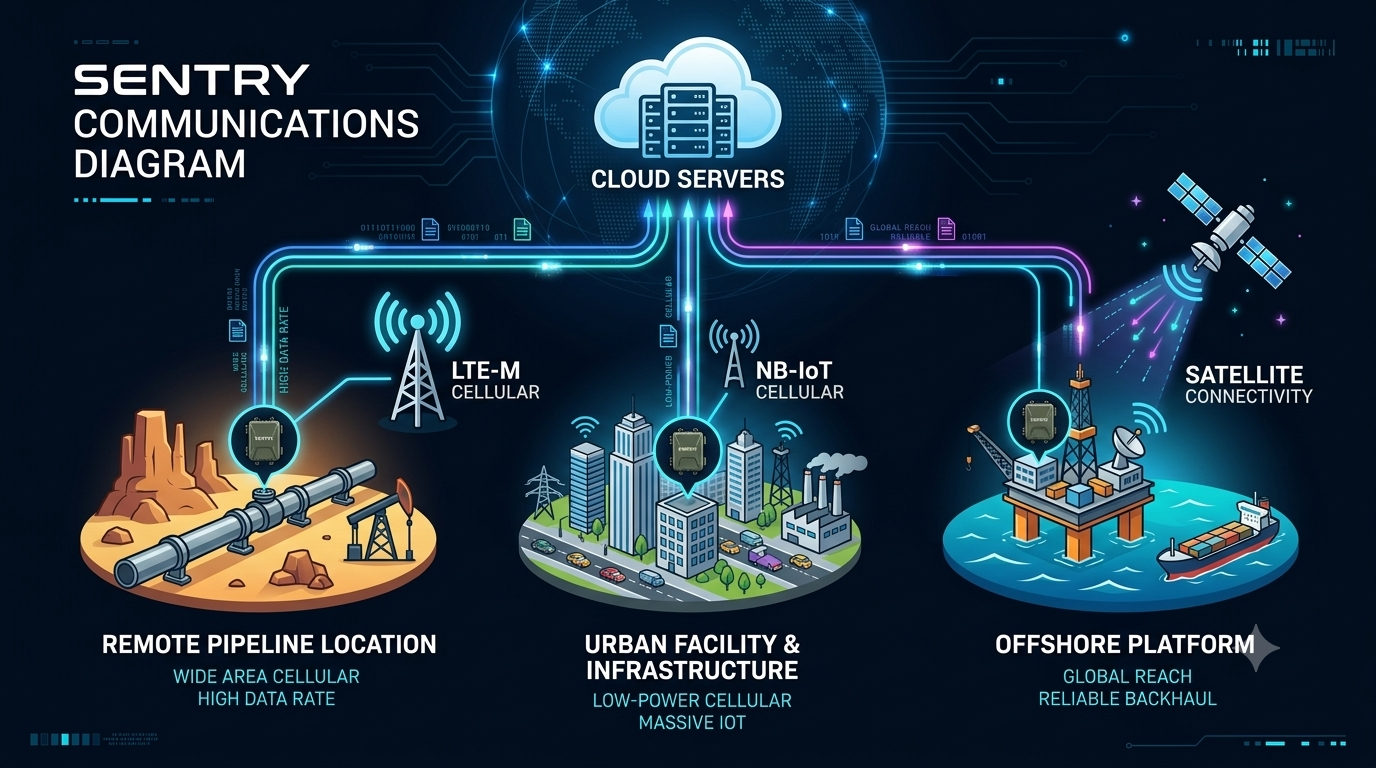
PetraAI Sentry incorporates multiple communication technologies suitable for industrial deployments, including LTE-M, NB-IoT, and satellite connectivity. This flexibility means it can operate in urban facilities or extremely remote pipeline corridors where conventional cellular infrastructure may be unavailable.
Data transmission uses MQTT-SN, a lightweight protocol specifically designed for sensor networks with limited bandwidth and power. So, even out in the middle of nowhere, it can send its encrypted message saying, 'Houston, we have a problem.'
The device features stainless steel ports (SMA/N-type) and IP68 cable glands, ensuring robust, weatherproof connections for external antennas and sensors.
The $64,000 Question: Does It Actually Work?
As impressive as the technology sounds, a review must ask the tough questions.
The claim of predicting failures fourteen days in advance is ambitious. To be fair, the company does not pretend otherwise. Validating such performance would require extensive field testing across diverse operating environments — from the frozen Arctic to the baking Middle East, from quiet rural pipelines to noisy industrial complexes.
There are other challenges, too. Can the AI consistently distinguish genuine defects from normal operational noise? How does it perform on different pipe materials and diameters? What happens when the temperature differential drops below 10°C — and can the piezoelectric harvesters truly maintain operation in that state? How does the device withstand mechanical vibration, electromagnetic interference, and weather exposure?
These are not flaws — they are questions any rigorous review must ask. The company acknowledges them openly, which is a good sign. The engineering concept is solid, the technology is proven, and the potential benefits are immense. But real-world validation will be the ultimate test.
The Bigger Picture
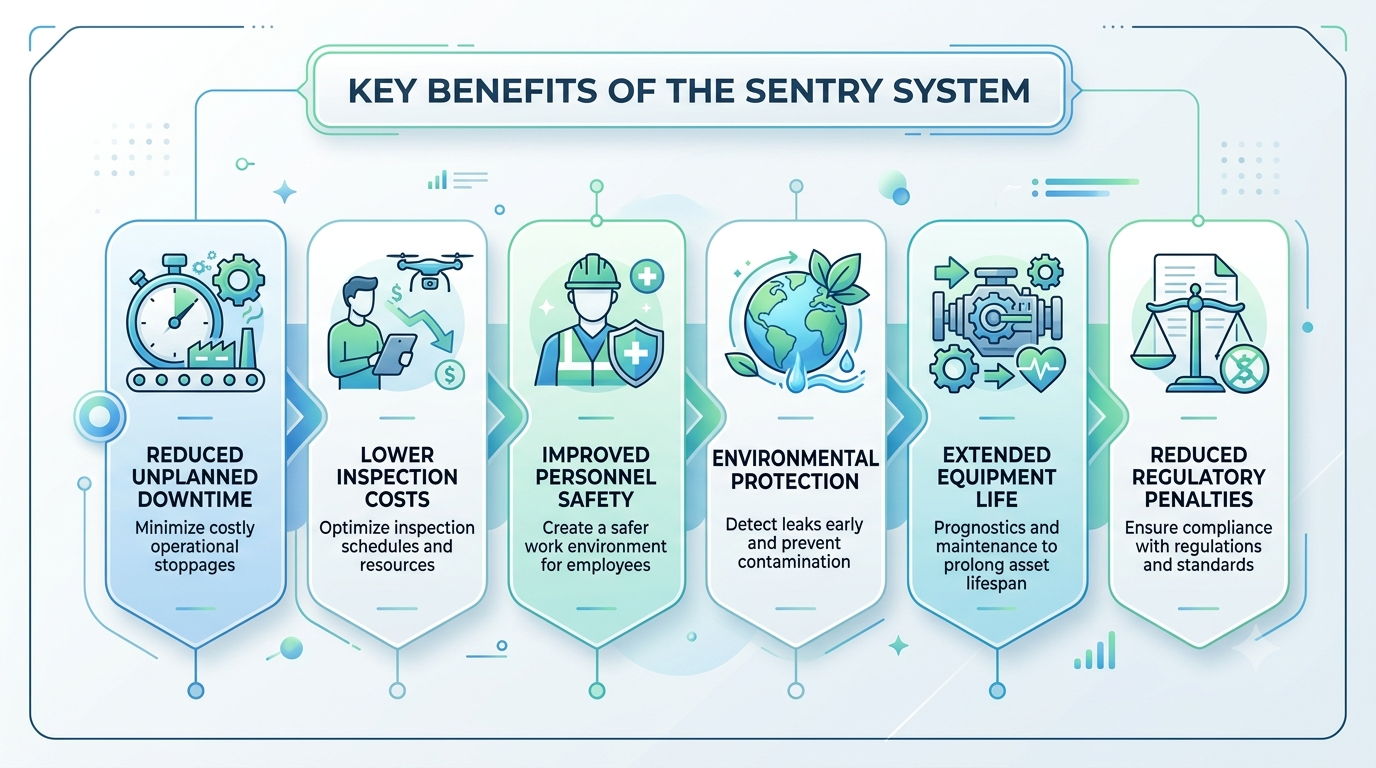
If the PetraAI Sentry delivers on its promises, the implications are significant.
For the industry: Fewer unplanned shutdowns, lower inspection costs, extended equipment life, and reduced regulatory penalties.
For the environment: Early detection means fewer leaks and spills. Fewer ruptures mean less contamination of soil, water, and air.
For safety: Fewer people need to inspect dangerous infrastructure in hazardous conditions. The device does the risky work, so humans don't have to.
The company's founder, Jasmine Randolph, described the Sentry as representing a shift "from digital communication to Autonomous Asset Stewardship." In simpler terms: the device does not just send reports — it takes responsibility.
Verdict
The PetraAI Sentry V1.3 is an elegant piece of engineering that addresses a genuine, urgent industrial problem. Its self-powered, dual-harvesting architecture is a masterstroke of practical innovation, eliminating one of the greatest logistical headaches in remote monitoring. Its edge AI capabilities bring intelligence directly to the asset, reducing latency and costs. Its Class 1 Division 1 compliant enclosure ensures it can operate safely in the most hazardous environments. And its cryptographic trust ledger — secured by an isolated secure core and dedicated hardware element — ensures that the data it produces is beyond dispute.
Jasmine Randolph has created something genuinely visionary — a device that embodies her philosophy of Proactive Stewardship. It is the product of someone who understands not just the technology, but the real-world consequences of getting it wrong.
Does it represent a revolution in pipeline safety? Potentially. But like any revolution, it will need to prove itself in the trenches before we can declare victory.
For now, the Sentry stands as one of the most compelling industrial monitoring solutions I have encountered. It is clever, practical, and — crucially — designed with the real world in mind. If the field trials match the promise, PetraAI may have just given us a genuine glimpse of the future.
Innovative, practical, and potentially transformative — but real-world validation is still the key piece of the puzzle.
Daniel T. is a Robotics Graduate and member of the Black Scientists and Inventors team. This review was edited for Tech Pulse by M. Williams.


