Book Review: Closing the Gap: The Fourth Industrial Revolution in Africa by Tshilidzi Marwala
Book • Reviewed Feb. 17, 2026
★ ★ ★ ★ ★
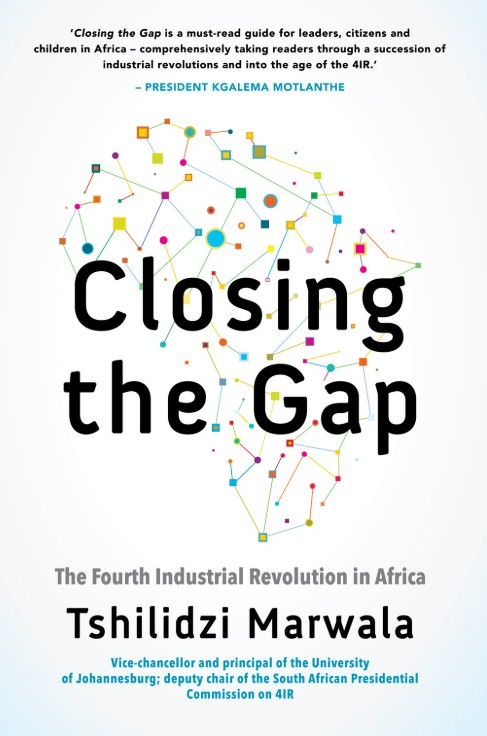
Tshilidzi Marwala’s Closing the Gap arrives at a pivotal moment for the African continent—a moment defined by both technological acceleration and widening inequality. Published by Pan Macmillan in 2020, the book positions itself as an accessible, African‑centred guide to the Fourth Industrial Revolution (4IR). It succeeds not only in demystifying complex technologies, but also in grounding them in the lived realities, constraints, and opportunities of African societies.
Marwala’s motivation for writing the book is clear and compelling. As he explains, many existing 4IR texts are “not simple enough to be able to explain the concepts… or they are littered with mathematical equations” . His aim, therefore, is accessibility—both in language and in relevance. He draws on personal memories, rural upbringing, and community experiences to contextualise the technologies shaping our future. This grounding gives the book a warmth and relatability rarely found in technology literature.
A Structure That Mirrors the Continent’s Challenges
The book is organised into digestible sections—Industry, Data, Business, and Society—reflecting the multi‑layered nature of 4IR. Notably, the Society section is the longest, a deliberate choice that mirrors Marwala’s belief that technological change is ultimately social change. “society is the longest and most detailed section which… speaks to its importance” .
Each section blends explanation with application. Readers encounter not only what AI, automation, or blockchain are, but also how they manifest in mining, banking, healthcare, education, and governance across Africa.
Africa’s Position: Behind, Yet Brimming with Potential
Marwala is candid about Africa’s uneven progress. South Africa, he argues, is “a mixed bag”—behind global leaders but ahead of many African peers . Rwanda’s drone‑based medical deliveries, Kenya’s digital ecosystem, and Ghana’s billion‑dollar Google AI lab illustrate pockets of excellence. Yet systemic issues—especially education—remain a bottleneck.
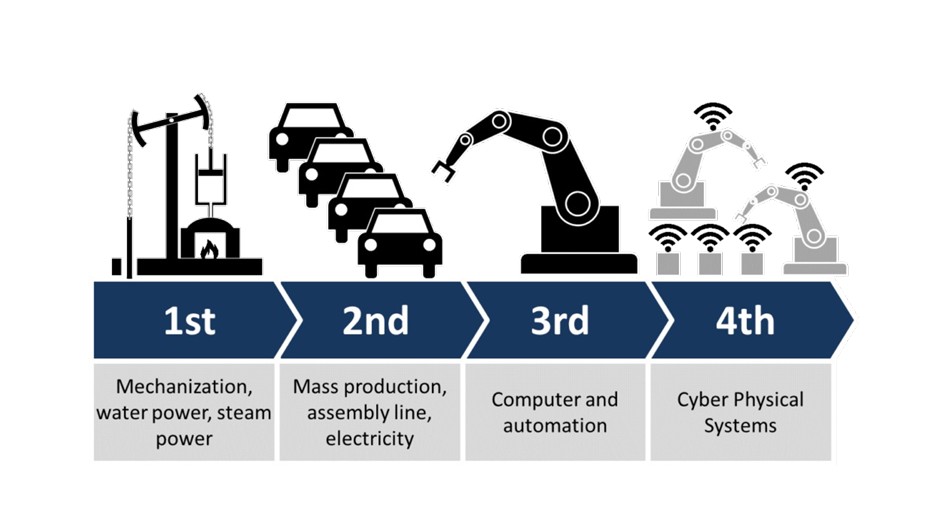
One of the book’s strengths is its refusal to accept the narrative that Africa must “catch up” on previous industrial revolutions before embracing the fourth. As Marwala states, “it is actually quite irrelevant… the technologies of the fourth industrial revolution are much more easily implementable” . This argument reframes Africa not as a laggard, but as a region uniquely positioned to leapfrog.
Technology as a Tool for Competitiveness
A recurring theme is competitiveness. Automation, predictive maintenance, and AI‑driven optimisation are not optional luxuries—they are survival tools. Marwala warns that resisting automation to “protect jobs” is misguided: “those jobs… are simply going to migrate elsewhere” .
His examples are vivid and practical:
- Predictive maintenance in power stations and mines
- AI‑assisted diagnostics in hospitals
- Fintech disruption reshaping banking
- 5G and spectrum allocation as national imperatives
These examples make the book particularly valuable for policymakers, industry leaders, and educators.
Data: Africa’s New Oil—If We Can Protect It
The section on data is one of the book’s most urgent. Marwala highlights the dangers of unregulated data extraction, noting that global tech giants “are eyeing the African database” . He raises concerns about:
- data sovereignty
- cybersecurity
- anonymisation failures
- the monetisation of African languages and health records
His call for African‑designed data governance frameworks is timely and necessary.
Ethics, Democracy, and the Human Future
Perhaps the most thought‑provoking parts of the book concern ethics and democracy. Marwala warns of AI systems that can “nudge people to act in a certain way without them noticing” , raising profound questions about free will, political manipulation, and the rise of “techno‑feudalism”.
Yet he remains optimistic: ethical AI is possible, but only if African voices help shape global standards.
Verdict
Closing the Gap is an essential contribution to African technology discourse. It is clear, engaging, and grounded in lived experience. More importantly, it challenges African readers to see themselves not as passive recipients of global technology, but as active shapers of the future.
For the Black Scientists & Inventors Platform, this book is more than a review subject—it is a call to action.
By The Black Scientists and Inventors' Team.
Have your say in Ideas Hub, click here !


